
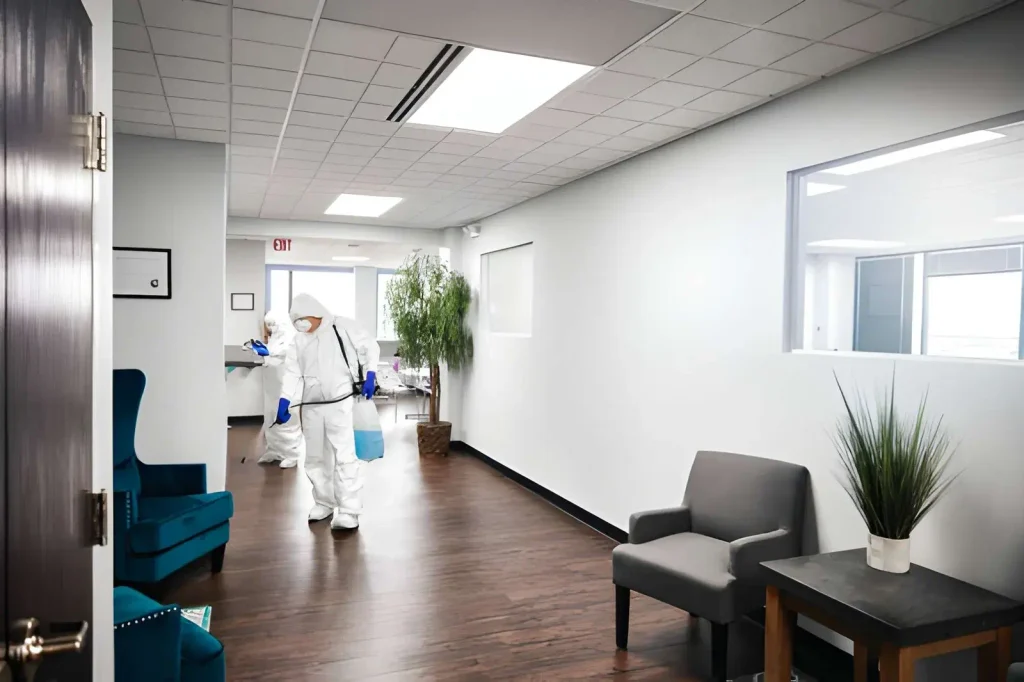
Facility managers often assume that a clean-looking office meets health and safety standards, but appearance and disinfection are not the same thing. Standard janitorial services remove visible dirt and dust, while medical-grade disinfection targets pathogens at a cellular level. The core difference lies in the products, contact times, and protocols used to eliminate bacteria, viruses, and other microorganisms that standard cleaning cannot reach.
For practice administrators overseeing healthcare facilities, this distinction carries real consequences. Regulatory bodies hold medical and dental offices to infection control standards that general office spaces are not required to meet. Understanding these differences helps administrators make informed decisions about vendor selection and cleaning frequency.
This article breaks down what separates clinical-level sanitization from routine cleaning, why standard janitorial contracts fall short in medical settings, and what a proper disinfection plan should include.
Key Takeaways
- Medical-grade disinfection uses EPA-registered products and specific contact times that standard cleaning does not follow.
- Routine janitorial service focuses on visible cleanliness, not pathogen elimination required in healthcare settings.
- A qualified disinfection plan requires documented protocols and a provider trained in infection control standards.
What Sets Clinical-Level Sanitization Apart
Medical grade disinfection cleaning differs from standard janitorial work in its purpose, the products used, and the areas it targets. Facility managers and practice administrators need to understand these distinctions to protect patients, staff, and the facility’s compliance standing.
Purpose and Risk Reduction
Standard office cleaning removes visible dirt and reduces general grime. Medical-grade disinfection targets pathogen transmission directly.
The goal is to break the chain of infection between patients, staff, and surfaces. This matters most in facilities where immune-compromised individuals, open wounds, or bodily fluids are present.
A regular office does not carry the same exposure risk as a clinic or urgent care center. Cleaning protocols in healthcare settings are built around reducing healthcare-associated infections (HAIs), not just improving appearance.
This distinction affects staffing, training, and documentation requirements. Facility managers overseeing medical spaces need cleaning staff trained in bloodborne pathogen protocols, not general custodial procedures.
Standards, Products, and Contact Times
Medical-grade disinfectants must meet EPA registration requirements and demonstrate efficacy against specific pathogens, including bacteria, viruses, and fungi. Standard cleaning products typically lack this level of testing or regulatory oversight.
Contact time is a critical factor administrators often overlook. A disinfectant only kills pathogens if it remains wet on the surface for the manufacturer’s specified duration, often between one and ten minutes.
| Factor | Standard Cleaning | Medical-Grade Disinfection |
| Product registration | Not required | EPA-registered |
| Kill claims | None or general | Specific to pathogens (e.g., MRSA, norovirus) |
| Contact time | Not specified | 1–10 minutes, product-dependent |
| Documentation | Rarely tracked | Logged for compliance audits |
Wiping a surface before the required contact time elapses reduces disinfection effectiveness, even with the correct product.
High-Touch and High-Risk Areas
High-touch surfaces carry the greatest transmission risk and require more frequent attention. These include door handles, light switches, exam tables, and shared equipment like blood pressure cuffs or thermometers.
Waiting rooms and reception counters also qualify as high-risk zones due to constant patient turnover.
Facility managers should prioritize these areas for multiple daily disinfection cycles, not just end-of-day cleaning. Restrooms, elevator buttons, and check-in kiosks fall into this category as well.
Standard office cleaning schedules typically address these surfaces once per day. Medical-grade protocols call for disinfection between patient contacts in exam rooms and hourly attention in shared spaces, depending on patient volume and facility type.
Why Routine Office Janitorial Service Is Not Enough
Standard janitorial service addresses visible dirt and surface tidiness, but it does not eliminate pathogens on high-touch surfaces or account for how infections spread within a facility. Facility managers who assume routine cleaning equals disinfection are leaving gaps that can affect employee health and regulatory compliance.
Typical Scope of Standard Cleaning
Standard office cleaning focuses on appearance and general hygiene. Crews typically vacuum carpets, empty trash, dust surfaces, and mop floors.
Restrooms get wiped down, and glass or mirrors are cleaned for visibility. Most contracts specify cleaning frequency but not disinfection standards.
Common tasks include:
- Trash removal and liner replacement
- Surface dusting (desks, shelves, window sills)
- Vacuuming and floor mopping
- Restroom sanitation (soap refills, basic wipe-downs)
- Glass and mirror cleaning
These tasks remove dirt and reduce clutter. They are not designed to kill bacteria, viruses, or fungal spores on contact surfaces.
Gaps in Infection Control
Standard cleaning products and methods often lack the contact time or chemical strength needed to destroy pathogens. A cloth wiped across a doorknob removes visible grime but may not neutralize viruses like influenza or norovirus.
High-touch points create the largest risk:
| Surface Type | Standard Cleaning Frequency | Disinfection Need |
| Doorknobs/handles | Daily wipe | High touch, frequent transfer |
| Light switches | Weekly or less | High touch, often missed |
| Shared keyboards | Rarely cleaned | High bacterial load |
| Breakroom surfaces | Daily wipe | Food contact risk |
Janitorial staff typically use general-purpose cleaners rather than EPA-registered disinfectants with proven kill claims against specific pathogens.
When Enhanced Protocols Are Necessary
Certain conditions call for medical-grade disinfection rather than routine cleaning. Flu season, confirmed illness outbreaks, and post-exposure incidents all raise the stakes.
Healthcare-adjacent facilities, including medical office buildings and urgent care centers, face stricter regulatory expectations under OSHA and CDC guidance. Facility managers should escalate protocols when:
- An employee reports a confirmed contagious illness
- The facility serves immunocompromised populations
- Local health authorities report elevated community transmission
- A biohazard incident (bodily fluids, blood) occurs
In these cases, standard janitorial teams lack the training, equipment, and disinfectant-grade chemicals required to reduce pathogen transmission risk effectively.
Building an Effective Facility Disinfection Plan
A disinfection plan works only when it accounts for how a facility actually operates, not just what surfaces need cleaning. Risk levels, staffing patterns, and accountability measures all determine whether medical-grade disinfection delivers consistent results.
Assessing Facility-Specific Risks
Every facility has different contamination risks based on foot traffic, patient contact, and surface types. A medical office handling bodily fluids requires different protocols than a general administrative space.
Facility managers should map out high-touch zones first. These typically include:
- Door handles and light switches
- Waiting room chairs and countertops
- Exam tables and equipment surfaces
- Restroom fixtures
- Shared electronics like keyboards and phones
Risk assessment also means identifying pathogen exposure levels. A dental clinic or urgent care facility faces higher bloodborne pathogen risk than a corporate office. This directly affects which EPA-registered disinfectants are appropriate and how long dwell times need to be.
Facilities with immunocompromised populations, such as senior care centers, require stricter protocols regardless of visible cleanliness.
Scheduling Services Around Operations
Disinfection frequency should match patient or occupant volume, not a generic weekly template. High-traffic medical facilities often need daily disinfection of exam rooms between patients, while common areas may only require twice-daily attention.
Timing matters as much as frequency. Scheduling deep disinfection during off-hours prevents disruption to patient care or business operations.
| Facility Type | Suggested Frequency |
| Medical/dental offices | Between each patient, daily deep clean |
| Urgent care centers | Continuous throughout shifts |
| Corporate offices | Daily high-touch points, weekly deep clean |
| Shared restrooms | Multiple times daily |
Coordination with facility staff prevents scheduling conflicts. Practice administrators should confirm blackout windows, such as procedure times, when disinfection crews cannot access certain rooms.
Training, Documentation, and Quality Assurance
Staff performing medical-grade disinfection need training specific to pathogen transfer, proper dwell times, and correct dilution ratios for hospital-grade products. Improper application reduces effectiveness even when the right chemicals are used.
Documentation protects the facility during inspections and audits. Logs should include:
- Date and time of disinfection
- Areas treated
- Products and concentrations used
- Staff member responsible
Quality assurance checks, such as ATP testing or routine surface swabbing, verify that protocols are working rather than assumed to be working. Facility managers should require periodic third-party verification, particularly in healthcare settings subject to regulatory review.
Clear accountability, backed by written records, separates a reliable disinfection program from one that only appears compliant on paper.
Choosing a Qualified Disinfection Provider
Not every cleaning company is equipped to handle medical-grade disinfection. Facility managers and practice administrators should evaluate potential providers based on their regulatory knowledge, product selection, and ability to adapt to specific facility conditions.
Experience With Healthcare and Regulated Environments
A provider’s track record in healthcare or regulated settings matters more than general cleaning experience. Ask about prior work in medical offices, dental practices, laboratories, or other environments subject to infection control standards.
Providers familiar with OSHA bloodborne pathogen standards and CDC guidelines will understand how to handle biohazard waste, cross-contamination risks, and documentation requirements. This background reduces the chance of compliance gaps during inspections or audits.
Facility administrators should request references from similar facility types. A provider that has serviced urgent care clinics or outpatient surgery centers will likely understand workflow disruptions and patient safety concerns better than one focused solely on office cleaning.
EPA-Registered Products and Proven Methods
Disinfectants used in medical-grade cleaning must be EPA-registered and matched to specific pathogens relevant to the facility. Providers should be able to explain which products they use and why, including contact times and surface compatibility.
Ask for documentation showing that products meet EPA List N or List K standards, depending on the facility type. A qualified provider will also follow manufacturer instructions precisely, since incorrect dilution or insufficient dwell time reduces disinfectant effectiveness.
| Consideration | What to Verify |
| Product registration | EPA List N or List K compliance |
| Application method | Manual application, electrostatic spraying, or fogging |
| Contact time | Matches manufacturer label requirements |
| Surface compatibility | Safe for medical equipment and sensitive surfaces |
Customized Service for Facility Needs
No two facilities have identical disinfection requirements. A dental office, imaging center, and outpatient clinic each present different traffic patterns, equipment types, and contamination risks.
A qualified provider will conduct a site assessment before proposing a service plan. This includes identifying high-touch surfaces, reviewing patient flow, and noting any equipment requiring special handling procedures.
Facility managers should expect a written scope of work outlining service frequency, specific areas covered, and products used for each zone. Providers unwilling to customize their approach or who offer only standardized packages may not be suited for regulated healthcare environments.