
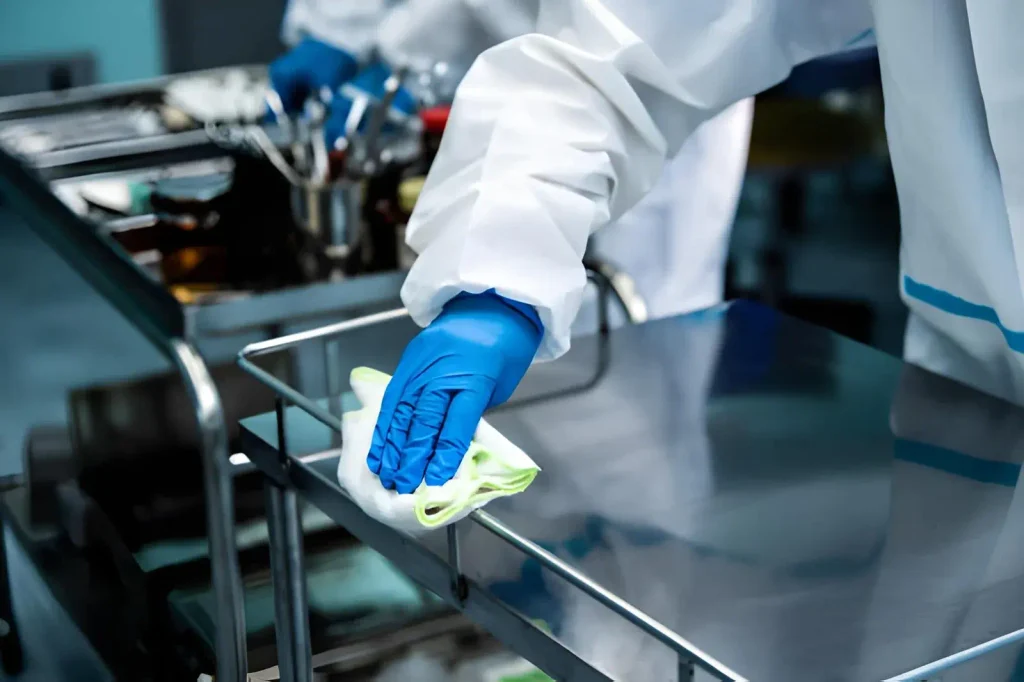
Michigan clinic owners cannot afford to guess whether their cleaning vendor understands infection control. A janitorial company that treats a medical office the same as a retail store puts patients, staff, and the clinic’s reputation at risk.
Clinics should require janitorial vendors to follow documented, EPA-registered disinfection protocols specific to healthcare settings, along with proof of staff training in bloodborne pathogen handling and cross-contamination prevention. This standard separates a general cleaning service from one qualified to work in a clinical environment.
Michigan clinics face specific regulatory expectations tied to patient safety, and janitorial vendors need to meet those expectations consistently, not occasionally. The sections below outline what to require from a vendor, how to verify their training and documentation, and what questions to ask before signing a contract.
Key Takeaways
- Clinics need a clear standard for what counts as acceptable infection control cleaning.
- Vendor training records and documented procedures matter as much as the cleaning itself.
- Facility-specific protocols and a structured evaluation process help clinics choose a qualified janitorial partner.
Core Infection Prevention Standards For Michigan Clinics
Michigan clinics operate under infection control expectations that mirror requirements found in state administrative code for licensed health facilities, even when a private practice isn’t directly regulated under those same provisions. A janitorial vendor working in a clinical environment needs to understand cleaning frequency, surface-specific disinfection, and product chemistry, not just general commercial cleaning practices.
Risk-Based Cleaning Frequencies
Cleaning schedules should match the infection risk of each area, not follow a single blanket routine. Waiting rooms and reception areas need daily disinfection at minimum, with additional wipe-downs during flu season or disease outbreaks.
Exam rooms require disinfection between every patient, not just at the end of the day. Restrooms need at least twice-daily attention in higher-traffic clinics.
A basic frequency breakdown looks like this:
- Exam rooms: Between each patient use
- Waiting areas: Daily, with spot cleaning throughout the day
- Restrooms: 2+ times daily
- Break rooms and staff areas: Daily
- Floors: Daily mopping, with immediate spot cleaning for spills or contamination
Clinic managers should request a written cleaning schedule from any vendor, not a verbal agreement. This creates accountability and gives staff a reference point for compliance checks.
High-Touch Surface Disinfection
High-touch surfaces carry a disproportionate share of pathogen transfer risk compared to floors or walls. Door handles, light switches, chair armrests, and payment terminals get touched dozens of times per hour and require dedicated attention.
A janitorial vendor should treat these surfaces as a separate task category, not an afterthought during general cleaning. Common high-touch points include:
- Doorknobs and push plates
- Light switches
- Countertops and check-in desks
- Chair arms and waiting room furniture
- Elevator buttons (if applicable)
- Pens, clipboards, and shared office equipment
These surfaces need disinfection multiple times per day, not once. Clinics should ask vendors how they track completion of high-touch cleaning tasks, since verification matters as much as the cleaning itself.
Safe Product Selection And Dwell Times
Not every disinfectant labeled “hospital-grade” performs equally, and dwell time (the amount of time a surface must stay visibly wet) determines whether a product actually kills the pathogens it claims to address. A vendor using the correct chemical but wiping it off too soon provides little protection.
Clinics should require vendors to use EPA-registered disinfectants listed on List N, which covers products effective against a broad range of pathogens including viruses. Staff performing the cleaning need training on the specific dwell time for each product, since this varies by manufacturer and can range from one to ten minutes.
Product safety data sheets (SDS) should be available on-site at all times. Clinic managers should also confirm that vendors avoid mixing incompatible chemicals, which can create hazardous fumes or reduce disinfecting effectiveness.
Vendor Training, Documentation, And Quality Control
A janitorial vendor’s competence shows up in three areas: how well staff are trained on health hazards, how thoroughly their work is documented, and how consistently their performance is checked. Clinics that skip these details often discover problems only after an infection control audit flags them.
Bloodborne Pathogen And Exposure Training
Any vendor working in a Michigan clinic must provide OSHA Bloodborne Pathogen Standard (29 CFR 1910.1030) training to every technician assigned to the site. This isn’t optional paperwork; it’s a legal requirement tied to handling biohazard waste, sharps, and contaminated surfaces.
Ask vendors for proof of annual training completion, not just a one-time certificate from years ago. Training should cover proper glove use, decontamination procedures, and what to do if a technician is exposed to blood or bodily fluids.
Vendors should also train staff on Hepatitis B vaccination protocols and post-exposure reporting steps. A clinic manager should request documentation showing which employees completed which training modules and when.
Cleaning Logs And Compliance Records
Detailed cleaning logs protect both the clinic and the vendor if a complaint or inspection arises. Logs should include the date, time, technician name, areas cleaned, and products used for each visit.
| Log Element | Why It Matters |
| Date/time stamp | Confirms cleaning frequency matches contract |
| Technician ID | Establishes accountability |
| Disinfectant used | Verifies EPA List N compliance |
| Areas serviced | Identifies gaps in coverage |
Vendors should retain these records for at least one year, ideally longer for clinics subject to state health inspections. Digital logging systems reduce errors compared to paper checklists and allow managers to review compliance remotely.
Inspection Procedures And Corrective Actions
A reliable vendor conducts routine site inspections, not just informal walk-throughs. These should include swab testing or visual audits of high-touch surfaces like exam tables, door handles, and waiting room chairs.
When an inspection reveals a gap—missed disinfection, improper waste disposal, or expired supplies—the vendor should document the issue and outline a corrective action plan within 24 to 48 hours. Clinics should require written confirmation once the issue is resolved.
Quarterly performance reviews between the clinic manager and vendor supervisor help catch recurring problems before they become compliance risks. Vendors unwilling to commit to structured inspection schedules should be treated as a red flag during contract negotiations.
Facility-Specific Protocols That Protect Patients And Staff
Different areas of a Michigan clinic carry different infection risks, and a janitorial vendor’s cleaning approach should reflect that. Exam rooms, waste handling, and outbreak response each require distinct procedures, tools, and documentation.
Exam Rooms, Waiting Areas, And Restrooms
Exam rooms need to be disinfected between every patient, not just at the end of the day. This includes exam tables, doorknobs, light switches, and any equipment surfaces touched during the visit.
Waiting areas require attention to high-touch points like chair armrests, magazine racks (if still used), and check-in counters. A vendor should clean these multiple times per shift, not once.
Restrooms demand a higher disinfection standard due to bodily fluid exposure. Vendors should use EPA-registered hospital-grade disinfectants with proper dwell times.
Key surfaces to prioritize:
- Door handles and push plates
- Light switches
- Faucet handles and soap dispensers
- Seating and armrests
- Countertops and check-in kiosks
Medical Waste And Sharps Area Coordination
Janitorial staff should never handle sharps containers or red-bag medical waste directly; this falls under separate regulated medical waste protocols. Instead, the vendor’s role is to clean and disinfect the areas surrounding these containers without disturbing them.
A clear line of responsibility matters here. The janitorial contract should specify that cleaning staff avoid direct contact with sharps disposal units and biohazard bins, leaving that handling to licensed medical waste companies.
Vendors should still disinfect floors, walls, and counters near waste stations regularly. Clinics should confirm this division of labor in writing before service begins, since confusion over waste handling creates compliance risks under OSHA bloodborne pathogen standards.
Outbreak Response And Enhanced Disinfection
During flu season, norovirus outbreaks, or other infectious periods, standard cleaning frequency is not enough. A qualified vendor should have a documented enhanced disinfection plan ready to deploy on short notice.
This typically means increasing cleaning frequency in common areas, switching to disinfectants effective against the specific pathogen involved, and extending dwell times as needed. Staff should also wear appropriate PPE during outbreak cleanings.
Michigan clinics should ask vendors directly: “What is your protocol when we notify you of a confirmed outbreak?” The answer should include response time, specific products used, and any additional charges tied to emergency service.
How To Evaluate A Janitorial Partner
Not every janitorial company is equipped to handle a healthcare setting. Clinic owners and office managers should assess three areas before signing a contract: clinical experience, staffing stability, and the specificity of the service agreement.
Healthcare Cleaning Experience
A vendor’s resume matters. Ask how many years they have serviced medical or dental clinics, not just general offices.
Request references from current healthcare clients, and follow up with those contacts directly. A company that has cleaned retail spaces for a decade may still lack the training needed for exam rooms or biohazard waste.
Look for evidence of:
- OSHA Bloodborne Pathogens training for cleaning staff
- Familiarity with CDC and Michigan Department of Health guidelines for surface disinfection
- Experience with EPA List N disinfectants
- Knowledge of color-coded microfiber systems to prevent cross-contamination between rooms
If a vendor cannot explain their disinfection protocol for a patient bathroom versus a waiting room, that is a warning sign.
Staffing Reliability And Communication
Turnover disrupts consistency, and clinics cannot afford gaps in coverage. Ask potential vendors how they staff backup cleaners when a regular employee calls off.
A reliable partner will have a documented process for substitute staffing that does not compromise training standards. Communication also matters more in a clinic than in a typical office building.
Find out:
- Who the clinic’s direct point of contact will be
- How quickly the vendor responds to complaints or missed tasks
- Whether staff undergo background checks before entering a healthcare facility
- If cleaning logs or checklists are provided after each visit
A vendor unwilling to share this information upfront is unlikely to improve after the contract starts.
Customized Scope Of Work And Service Agreements
Generic cleaning contracts rarely account for the specific needs of a clinic. The scope of work should list exact tasks by room type, not vague terms like “general cleaning.”
| Area | Required Detail |
| Exam rooms | Disinfectant contact time, surface list |
| Waiting room | High-touch point frequency |
| Restrooms | Sanitizing protocol, supply restocking |
| Waste disposal | Biohazard handling procedures |
The agreement should also specify frequency, dwell times for disinfectants, and accountability measures if tasks are missed. Ask whether the contract includes periodic audits or inspections.
A vague agreement leaves too much room for inconsistent results, which increases risk in a clinical environment.