
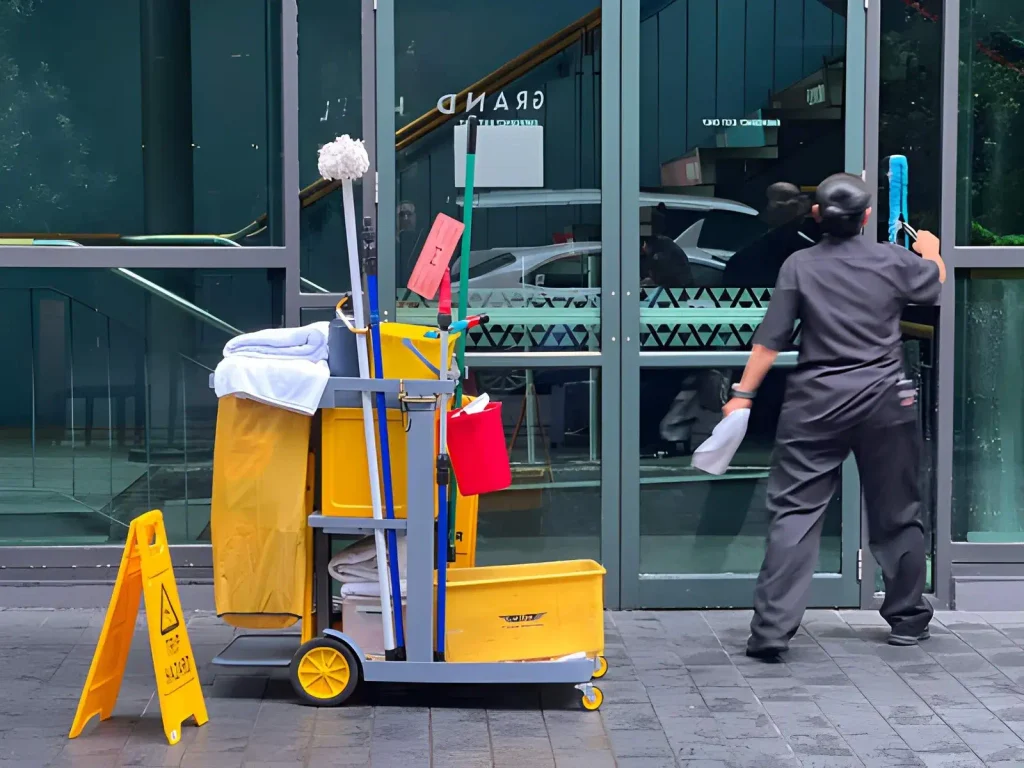
Day porter services and nightly cleaning do different jobs, and most offices need to decide which one matters more for their daily operations. A day porter works during business hours to keep restrooms, lobbies, and break rooms presentable while people are using them. A nightly crew works after hours to handle the larger tasks that are difficult to complete in an occupied building.
Choose day porter services if your office sees steady foot traffic and needs spaces kept clean throughout the day, and choose nightly cleaning if your main need is a thorough reset of the building after everyone leaves. Many offices end up using both, since the two services cover different parts of the cleaning workload.
The right fit depends on how many people use your building, how often visitors come through, and how much you want to spend. This article walks through each option, the conditions that favor one over the other, and the cost trade-offs property managers and office managers should weigh. It also covers how Hood Safe LLC can help you build a schedule that matches your space.
Key Takeaways
- Day porters maintain cleanliness during business hours, while nightly crews handle deeper cleaning after hours.
- Foot traffic, visitor volume, and building use determine which schedule fits best.
- A combined plan can balance coverage and cost when one service alone leaves gaps.
How Each Cleaning Schedule Supports Your Office
A day porter keeps shared spaces presentable while employees are working, and a nightly crew handles the larger cleaning tasks once the building is empty. Each schedule covers a different part of the workload, so the right choice depends on how your space is used.
Day Porter Duties During Business Hours
A day porter works on site during operating hours and responds to problems as they come up. The role centers on high-traffic areas that get dirty between nightly visits.
Typical duties include:
- Wiping down restroom sinks, counters, and fixtures, and restocking soap, paper towels, and toilet paper
- Emptying trash and recycling in common areas before bins overflow
- Cleaning up spills in lobbies, hallways, and break rooms
- Disinfecting door handles, elevator buttons, and other shared touchpoints
- Straightening conference rooms after meetings
- Tidying the kitchen and refilling coffee and supply stations
Because a porter is present all day, small issues get handled within minutes instead of waiting until evening. Visitors and clients also see a clean building at the times when it matters most.
A porter usually does not replace deep cleaning. Tasks like vacuuming every workstation or scrubbing floors are better done when the space is empty and furniture can be moved.
Nightly Cleaning Tasks After Employees Leave
Nightly cleaning takes place after staff have gone, which lets crews work without interruptions and use equipment that would disrupt the workday. The goal is to reset the office so it is ready the next morning.
Common nightly tasks include:
- Vacuuming carpets and mopping hard floors
- Emptying all trash and recycling bins, including those at individual desks
- Dusting surfaces and wiping down desks, where items have been cleared
- Cleaning and disinfecting restrooms in full
- Cleaning glass doors and interior windows
- Wiping break room counters, appliances, and tables
Nightly service covers the whole floor plan, not just shared areas. This makes it the more thorough option for offices with many workstations or private offices.
The tradeoff is timing. Once the crew leaves, the office stays as is until the next night, so a spill at 10 a.m. or a restroom that runs out of supplies at noon will wait unless someone on staff handles it.
Routine Maintenance Versus Scheduled Deep Cleaning
Daily upkeep and deep cleaning serve different purposes, and most offices need both. Routine maintenance keeps surfaces acceptable day to day, while deep cleaning removes buildup that regular passes miss.
| Task Type | Examples | Typical Frequency |
| Routine maintenance | Trash removal, restroom checks, spot cleaning, touchpoint disinfecting | Daily or several times per day |
| Scheduled deep cleaning | Carpet extraction, floor stripping and waxing, upholstery cleaning, high dusting | Monthly, quarterly, or twice a year |
Day porters generally cover routine maintenance during business hours. Nightly crews can handle routine tasks as well as light periodic work, and larger deep cleaning projects are often scheduled on weekends or as separate visits.
Matching tasks to the right schedule helps avoid paying for work that is not needed. A small office with low foot traffic may do well with nightly cleaning plus quarterly carpet care, while a busy multi-tenant building may need a porter to keep common areas in order between those visits.
Office Conditions That Determine the Best Fit
The right cleaning schedule depends on how many people use the space, how often they use shared areas, and when the building is occupied. Noise tolerance, privacy rules, and access policies also decide whether daytime or after-hours service works better.
Employee Headcount, Visitor Traffic, and Operating Hours
Headcount and foot traffic drive how quickly an office gets dirty. An office with 15 employees and few visitors rarely needs a cleaner on site during the day. A 150-person office with a staffed reception desk and daily client meetings often does.
As a general guide:
| Office Condition | Better Fit |
| Under 25 employees, minimal visitors | Nightly cleaning |
| 25 to 75 employees, moderate visitors | Nightly cleaning plus a part-time day porter |
| 75+ employees or constant visitor flow | Full-time day porter plus nightly cleaning |
Operating hours matter as well. Offices that run 12-hour days, weekend shifts, or multiple tenant schedules leave long gaps between nightly visits, so messes sit for hours.
Restroom, Breakroom, and Shared-Space Cleaning Needs
Restrooms, breakrooms, and lobbies show wear first. A restroom serving 40 people can run low on paper products and soap by early afternoon, and a spill in a breakroom at 10:00 a.m. stays there until the night crew arrives.
A day porter handles these tasks while the office is in use:
- Restocking soap, towels, and toilet paper
- Wiping sinks, counters, and high-touch surfaces
- Emptying trash in breakrooms and common areas
- Cleaning spills and tracked-in debris in lobbies and entrances
Nightly cleaning covers the work that needs an empty floor, such as vacuuming, mopping, and deep sanitizing. Offices with heavy shared-space use usually need both, while lighter-use offices may be fine with nightly service alone.
Noise, Privacy, and Building Access Requirements
Vacuums, floor machines, and trash carts create noise that can disrupt calls and meetings. If employees work in open layouts or take frequent client calls, daytime cleaning must stay light and quiet, which suits a day porter’s tasks better than full-scale cleaning.
Privacy rules can favor one model over the other. Law, medical, and financial offices often restrict who may enter workspaces during business hours because of confidential documents on desks and screens. In those settings, nightly cleaning under a signed access agreement may be the safer option.
Building access also plays a role. Some properties limit after-hours entry, require escorts, or lock down elevators at night, which can make a daytime porter easier to schedule. Check lease terms, security policies, and insurance requirements before choosing a schedule.
Cost and Coverage Trade-Offs to Evaluate
Day porter services and nightly cleaning differ in how they charge, when labor is on site, and how fast problems get fixed. Matching those factors to your building’s traffic and budget determines which option, or which mix, delivers better value.
How Staffing Hours and Task Frequency Affect Pricing
Nightly cleaning is usually priced per visit or per square foot, with a crew working a fixed block of hours after the office closes. Day porter services are typically priced by the hour, since a porter stays on site during business hours.
A single porter working an 8-hour shift costs more per week than a 3-hour nightly crew visit. But the two cover different work, so the price comparison depends on what you need done and how often.
| Factor | Day Porter | Nightly Cleaning |
| Typical pricing basis | Hourly rate | Per visit or per square foot |
| Labor on site | Business hours | After hours |
| Best for | Frequent touch-ups | Deep, scheduled tasks |
Task frequency drives cost in both models. Restroom checks every two hours require more porter time than one daily restock. Vacuuming 20,000 square feet takes the same crew time whether it happens nightly or three times a week, so reducing frequency lowers the bill.
Immediate Spill Response Versus Uninterrupted Cleaning Time
A day porter can respond to a coffee spill, a clogged restroom, or an empty soap dispenser within minutes. This lowers slip-and-fall risk and keeps shared spaces presentable for visitors and staff.
Nightly crews work without foot traffic. They can run floor machines, clean carpets, and sanitize workstations without moving around occupied desks or blocking hallways.
The trade-off comes down to timing:
- Daytime problems stay visible longer under nightly-only service. A spill at 9:00 a.m. may sit until the crew arrives that evening.
- Porters work around occupied space. Loud equipment and wet-floor work are limited during business hours.
- Nightly crews finish heavier tasks faster because rooms are empty.
Offices with frequent client visits tend to value quick response. Offices with low daytime traffic often gain little from it.
When a Combined Daytime and Nightly Schedule Makes Sense
A combined schedule pairs a part-time porter with a nightly crew. The porter handles restrooms, break rooms, lobbies, and spot cleaning. The nightly crew handles floors, trash removal, and detailed surface cleaning.
This setup often fits buildings with high traffic, multiple tenants, or shared amenities such as kitchens and conference rooms. It can also reduce nightly workload, which may allow a shorter nightly visit.
A typical split looks like this:
- Porter, 4 hours midday: restroom checks, trash in common areas, break room reset.
- Nightly crew, 2 to 3 hours: vacuuming, mopping, desk-area dusting, full trash collection.
Compare the combined cost against nightly cleaning with added visits. For some offices, a few extra hours of porter time costs less than expanding the nightly scope.
Building a Cleaning Plan With Hood Safe LLC
A workable plan starts with a clear list of tasks, the hours when work can happen, and the areas that matter most to tenants and visitors. From there, a quote, a written scope, and regular reviews keep the arrangement accurate as your office changes.
Define Your Scope, Service Windows, and Priorities
Begin by walking the space and listing every area that needs attention. Separate tasks into two groups: those that benefit from daytime presence and those better done when the office is empty.
| Task | Typical Timing |
| Restroom restocking and spot cleaning | Daytime (day porter) |
| Lobby and entrance upkeep | Daytime (day porter) |
| Breakroom wipe-downs and trash removal | Daytime or evening |
| Vacuuming, mopping, deep restroom cleaning | After hours (nightly) |
| Window, carpet, and floor care | Scheduled periodically |
Next, set service windows around your building’s rules. Note elevator restrictions, security check-in procedures, and quiet hours.
Rank your priorities. If tenant-facing areas drive complaints, put porter coverage there first. If cost is the main constraint, a reduced porter schedule paired with nightly cleaning may cover the gaps.
Confirm Service Availability and Request a Tailored Quote
Before requesting pricing, confirm that Hood Safe LLC serves your location and can staff the hours you need. Availability can vary by area, shift length, and start date, so ask about these directly.
Prepare the details a quote depends on:
- Total square footage and number of floors
- Number of restrooms, breakrooms, and shared areas
- Desired days and hours for each service type
- Floor types, such as carpet, tile, or hard flooring
- Any compliance, security, or access requirements
Ask what the quote includes. Clarify supplies, equipment, supervision, and whether holidays or special events are billed separately.
Request the scope and pricing in writing. A written document makes later comparisons between day porter and nightly options straightforward.
Set Quality Standards and Review Performance
Agree on what “clean” means before service begins. Use a checklist for each area, with specific tasks and frequencies, so expectations are measurable instead of subjective.
A simple review routine might include:
- A walkthrough in the first week to confirm the scope matches reality
- A monthly inspection using the same checklist each time
- A running log of tenant or staff feedback
- A quarterly check of hours and tasks to see what should change
Designate one point of contact on your side and one on the provider’s side. This keeps issues from sitting unreported.
Adjust the plan when usage shifts. A new tenant, a change in headcount, or a seasonal increase in foot traffic may justify more porter hours or a different nightly task list.