
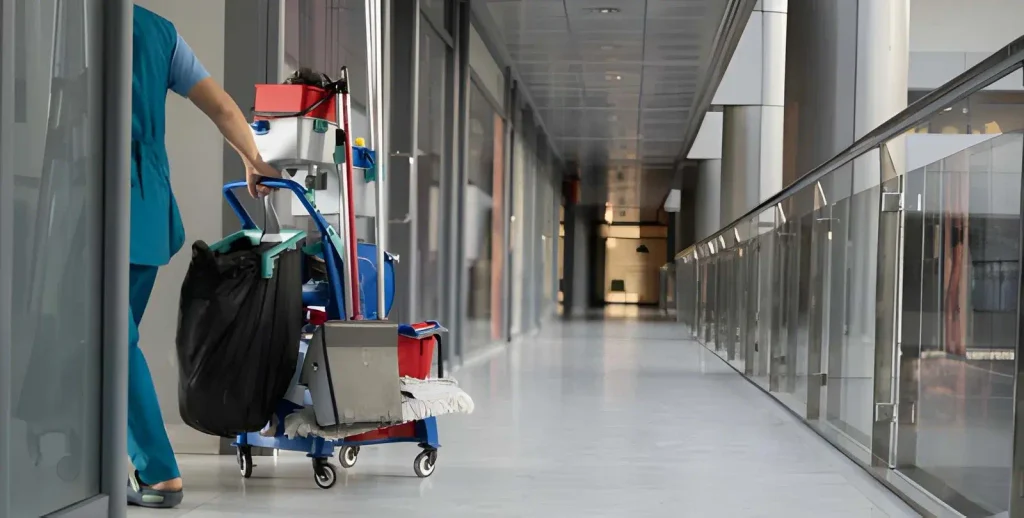
A clean workplace pays for itself through fewer sick days, steadier productivity, better employee retention, and stronger first impressions with clients and candidates. The return is rarely a single line item, but it shows up across absenteeism, turnover, and customer perception.
Clean workplace productivity ROI is positive when the cost of professional cleaning is lower than the combined savings from reduced absenteeism, lower turnover costs, and recovered focus time. Even modest gains in each area can outweigh a standard cleaning contract.
Office managers and HR leaders often treat cleaning as an overhead expense instead of a measurable investment. This article breaks down how to evaluate its financial value, how it affects attendance and morale, and how consistent standards shape what visitors and new hires think of your company.
Key Takeaways
- Cleaning costs are easiest to justify when compared against absenteeism, turnover, and lost focus time.
- A tidy, sanitary space supports attendance, concentration, and employee satisfaction.
- Consistent cleaning standards shape first impressions with clients, visitors, and job candidates.
Measuring the Financial Value of Workplace Cleanliness
A clean workplace can be measured in dollars by comparing what it costs to maintain against the losses that follow when it is neglected. The method is simple: identify the costs, identify the benefits, and track both against a starting point.
Direct Cleaning Costs and Hidden Costs of Neglect
Direct costs are easy to find on an invoice. They include janitorial contracts, supplies, equipment, and any specialty services such as carpet extraction or kitchen exhaust cleaning.
Hidden costs of neglect rarely appear as a single line item. They are spread across payroll, maintenance, and risk budgets.
| Cost Category | Direct or Hidden | Example |
| Janitorial contract | Direct | Monthly service fee |
| Supplies and equipment | Direct | Paper goods, disinfectants, vacuums |
| Sick leave and absenteeism | Hidden | Paid days lost to preventable illness |
| Lost productivity | Hidden | Time spent working around clutter or dirty shared spaces |
| Premature asset replacement | Hidden | Carpet or fixtures worn out by deferred cleaning |
| Compliance and safety exposure | Hidden | Grease buildup, slip hazards, failed inspections |
Hidden costs tend to exceed direct costs once they are added up, which is why a cleaning budget viewed alone can look larger than it is.
Calculating ROI With Measurable Benefits and Total Spending
The standard ROI formula applies: subtract total spending from total measurable benefits, divide by total spending, and multiply by 100. Total spending should include the full cost of the cleaning program, not only the contractor fee.
Measurable benefits are the savings you can tie to a specific number. Common examples include:
- Reduced absenteeism: days saved multiplied by average daily pay and benefit cost
- Lower turnover: fewer departures multiplied by the cost to recruit and train a replacement
- Longer asset life: deferred replacement costs for flooring, furniture, and equipment
- Lower risk costs: fewer incident claims, fines, or repair calls
Here is a worked example. If a program costs $60,000 per year and produces 84,000indocumentedsavings,theROIis(84,000 − $60,000) ÷ $60,000 = 40%.
Count only benefits you can document. Estimates for softer gains, such as employee morale, are better reported separately than folded into the formula.
Establishing Baselines and Tracking Results Over Time
A baseline is the set of figures recorded before a change to the cleaning program. Without one, any improvement is hard to attribute to cleaning rather than to other factors.
Collect at least three to six months of data on the metrics that feed your ROI formula:
- Absenteeism rates and sick days per employee
- Voluntary turnover and exit interview feedback
- Employee satisfaction scores, including questions about the workspace
- Facility service requests and repair costs
- Inspection scores or audit results
After the change, review the same metrics at regular intervals, such as quarterly. Compare results against the baseline and note other changes, like a new hiring wave or flu season, that could affect the numbers.
Consistent measurement lets operations and HR leaders adjust scope and frequency based on evidence rather than assumption.
Supporting Employee Productivity and Attendance
A workspace that is orderly, well maintained, and cleaned on a sensible schedule removes small daily frictions that slow people down. Targeted hygiene practices and thoughtful timing of cleaning tasks also help keep staff present and focused.
Reducing Distractions From Clutter and Poor Maintenance
Visual clutter competes for attention. Research from Princeton University’s neuroscience group has found that multiple objects in the visual field compete for neural representation, which can reduce focus. A cluttered desk or a crowded supply closet is more than an eyesore; it can make routine tasks take longer.
Maintenance problems create similar interruptions. A flickering light, a dripping faucet, or a stained ceiling tile draws attention and generates repeated complaints.
Common sources of distraction and practical fixes:
| Distraction | Typical Effect | Fix |
| Cluttered shared surfaces | Time lost searching for items | Daily surface clearing, assigned storage |
| Lingering odors | Complaints, reduced comfort | Regular trash removal, restroom and kitchen cleaning |
| Dust buildup | Sneezing, irritated eyes | Scheduled dusting and vent cleaning |
| Broken fixtures | Repeated interruptions | Quick-report process for repairs |
A written cleaning scope that separates employee responsibilities (clearing personal desks) from the cleaning team’s responsibilities (floors, restrooms, kitchens) keeps expectations clear.
Supporting Hygiene to Help Limit Illness-Related Absences
Shared surfaces carry germs. Keyboards, phones, door handles, elevator buttons, and break room appliances are touched by many people each day, and respiratory and stomach illnesses can spread through them.
Cleaning does not eliminate illness, but consistent practices can lower the chance of transmission. Absences cost more than the missed day itself, since coworkers often absorb extra work and managers spend time reassigning tasks.
Focus cleaning and disinfection on high-touch areas:
- Door handles, light switches, and shared appliance buttons
- Restroom fixtures, dispensers, and countertops
- Conference room tables, remote controls, and shared phones
- Break room refrigerators, microwaves, and coffee machines
Disinfectants need the correct contact time listed on the product label to work, so wiping and immediately drying a surface may not achieve the intended result. Stocking hand soap, sanitizer, and tissues in visible locations also supports good habits. Ask your cleaning provider to document which surfaces are disinfected and how often.
Scheduling Cleaning to Minimize Workflow Disruptions
When cleaning happens matters as much as how thoroughly it is done. Vacuums, floor machines, and chemical odors can interrupt calls, meetings, and concentrated work.
After-hours cleaning is the most common solution for offices with standard schedules. It avoids noise and wet floors during working hours and lets crews work without navigating around occupied desks. Workplaces with extended hours or shift work may need early morning or midday service for restrooms and kitchens.
A simple schedule can balance coverage and disruption:
- Daily: Trash removal, restroom cleaning, kitchen surfaces, and entryways
- Weekly: Vacuuming, dusting, and high-touch disinfection
- Monthly or quarterly: Carpet cleaning, vent and window cleaning, and deep cleaning of upholstery
Tell staff in advance about any daytime deep cleaning, such as carpet extraction, so they can plan around drying times. Sharing the schedule with the team also reduces repeated questions to office managers about when areas will be serviced.
Strengthening Employee Satisfaction and Retention
Employees interpret the condition of their workspace as a signal of how much the organization values them, and that signal can influence whether they stay. Collecting specific staff feedback and measuring turnover carefully helps managers act on cleanliness without drawing conclusions the data cannot support.
How Workplace Conditions Shape Employees’ Perceptions of Care
People notice the small, repeated details of their workday: a sticky break room counter, an overflowing trash bin, dust on monitors, or a restroom that runs out of supplies by noon. These details tend to shape how employees judge management’s attention to their daily experience.
A clean, well-maintained space communicates that someone is paying attention. A neglected one can suggest the opposite, even when leadership offers strong pay and benefits.
Cleanliness also affects physical comfort and health. Dust, stale air, and shared surfaces that are not sanitized regularly can contribute to allergy symptoms and the spread of common illnesses, which may lead to more sick days.
The areas employees touch most often tend to matter most:
- Restrooms: cleanliness and stocked supplies
- Kitchens and break rooms: wiped surfaces, emptied bins, clean appliances
- Desks and shared equipment: sanitized keyboards, phones, and conference tables
- Entrances and hallways: floors free of debris and visible grime
Using Staff Feedback to Prioritize Cleaning Improvements
Employees see problems that managers and cleaning schedules often miss. A short survey or a standing channel for reporting issues gives office managers direct information about what needs attention.
Keep the questions specific. Asking “Is the office clean?” produces vague answers, while asking employees to rate restrooms, kitchen areas, and shared workstations separately shows where the gaps are.
A simple process works well:
- Collect: run a brief quarterly pulse survey with three to five targeted questions.
- Sort: group responses by area, such as restrooms, kitchen, or open workspace.
- Act: fix the highest-scoring complaint first and adjust the cleaning scope or frequency.
- Report back: tell staff what changed.
That last step matters. Employees who see their input lead to visible changes are more likely to keep giving honest feedback, and the survey itself shows that leadership is listening.
Evaluating Retention Benefits Without Overstating Causation
Cleanliness is one of many factors in an employee’s decision to stay. Pay, management quality, workload, career growth, and flexibility usually carry more weight, so a cleaner office should not be expected to resolve turnover by itself.
To assess the effect fairly, track a few measures before and after a cleaning improvement:
| Measure | What it can show |
| Voluntary turnover rate | Whether departures change over 6 to 12 months |
| Exit interview comments | Whether workspace conditions are mentioned as a reason for leaving |
| Employee satisfaction scores | Whether ratings of the work environment improve |
| Sick-day usage | Whether absences related to illness decline |
Compare these figures against other changes made during the same period, such as raises or new managers. A drop in turnover that coincides with several initiatives cannot be credited to cleaning alone. Reporting results as a contributing factor, supported by survey and exit-interview data, gives HR and operations leaders a more reliable basis for budget decisions.
Building Better First Impressions Through Consistent Standards
Visitors and candidates form an opinion of a company within minutes of walking in, and cleanliness is one of the first things they register. Consistent, documented standards keep the spaces they see in the same condition every day, not just before scheduled meetings.
What Clients and Job Candidates Notice When They Arrive
Visitors rarely inspect a workplace, but they notice conditions that stand out. Common observations include:
- Dust on reception desks, ledges, and plant leaves
- Fingerprints on glass doors and entry panels
- Stained or worn carpet near the entrance
- Overflowing trash or recycling bins
- Odors from restrooms, kitchens, or damp floors
Job candidates add another layer to this. They are assessing whether the company cares about its people, and the condition of the break room and restrooms offers evidence.
Clients draw a related conclusion about attention to detail. A neglected lobby can make them question how carefully the company handles their work.
Consistency matters more than occasional deep cleans. A space that looks sharp on Monday and neglected by Thursday signals that standards depend on who is watching.
Prioritizing Reception Areas, Restrooms, and Shared Spaces
Not every area carries the same weight for first impressions. Focus the most frequent attention on the places visitors actually see and use.
| Area | What to check | Suggested frequency |
| Entrance and reception | Glass, floors, desk surfaces, seating | Daily, with a midday spot check |
| Restrooms | Fixtures, dispensers, floors, odor | Daily, with restocking checks during the day |
| Conference rooms | Tables, chairs, whiteboards, trash | After each use or daily |
| Break rooms and kitchens | Counters, sinks, appliances, floors | Daily |
| Hallways and elevators | Floors, handrails, buttons | Daily to several times weekly |
Restrooms deserve special attention because they are private and unsupervised, so visitors judge them harshly. Empty soap dispensers and low paper supplies are as noticeable as visible dirt.
Entry points also take the most abuse from weather and foot traffic. Walk-off mats and scheduled floor care there protect interior flooring and keep the first view tidy.
Choosing a Cleaning Partner and Setting Accountability Standards
A cleaning partner should be able to describe exactly what gets done, where, and how often. Ask for a written scope of work that lists tasks by area and frequency, instead of relying on a general promise of “full service.”
When comparing providers, look for:
- Verifiable references from similar office environments
- Proof of insurance and background-checked staff
- Training practices for cleaning technicians
- A clear process for reporting and fixing missed items
Accountability comes from measurement. Use a simple inspection checklist, scored on a regular schedule, and review results with the provider monthly.
Set a response window for complaints, such as correcting a reported issue within 24 hours. Assign one internal contact, often an office manager, to own the relationship so feedback reaches the provider quickly.
Standards that are written down, inspected, and reviewed are far easier to maintain than expectations that live only in conversation.