
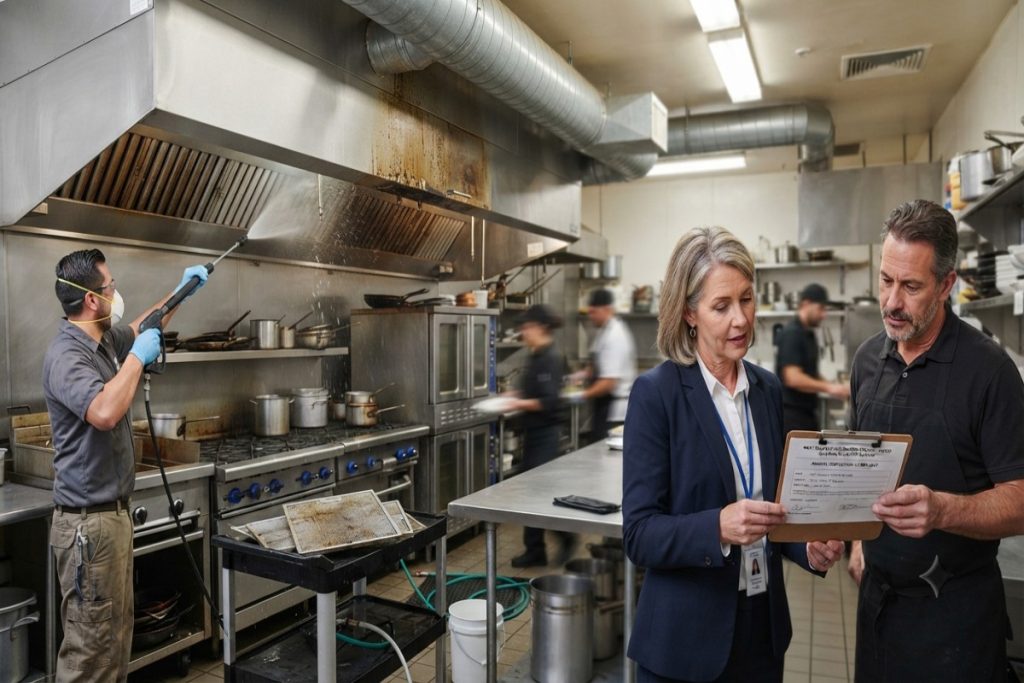
Most restaurant owners know hood cleaning is a fire safety requirement, but fewer realize it directly affects their insurance policy. Insurers can deny fire-related claims if there is no documentation proving your exhaust system was properly maintained. That single fact carries serious financial consequences for any food service operation.
Grease buildup in kitchen exhaust systems is one of the leading causes of restaurant fires. Insurance carriers are aware of this, which is why many policies include maintenance compliance clauses that reference standards like NFPA 96. Without proof of professional cleaning, you may be left covering the full cost of a fire loss on your own.
This article covers what insurers actually look for, how regular professional hood cleaning can affect your premiums, and what documentation you need to keep on file to protect your coverage.
Key Takeaways
- Regular hood cleaning is directly tied to whether your insurance policy will cover a fire-related claim
- Professional cleaning paired with proper documentation can help lower premiums and prevent claim denials
- Maintaining NFPA 96-compliant records is one of the most practical steps a restaurant owner can take to protect their business financially
Understanding the Link Between Kitchen Maintenance and Insurance Coverage
Insurance providers treat hood cleaning as a contractual obligation, not a suggestion. Missing or outdated documentation can result in denied claims and higher premiums.
Why Regular Hood Cleaning Matters for Risk Assessment
Grease buildup in exhaust systems is the leading cause of commercial kitchen fires in the United States. Insurers know this, and they factor your maintenance history directly into how they assess your risk profile.
When an adjuster reviews a fire claim, one of the first things they examine is your hood cleaning records. If documentation is absent or incomplete, the claim can be denied on the grounds of negligence — regardless of how the fire started.
Key reasons regular hood cleaning affects risk assessment:
- Fire frequency data links grease accumulation to higher claim rates, which insurers use to set premiums
- Documented cleaning intervals demonstrate due diligence, reducing your perceived liability
- Incomplete records — even a single missed service — can be used to challenge a claim
Typical Insurance Requirements for Restaurant Ventilation Systems
Most commercial property and restaurant insurance policies include specific language requiring compliance with NFPA 96, the national standard for commercial kitchen ventilation systems. This standard defines required cleaning frequencies based on cooking volume and equipment type.
Insurers typically expect:
| Requirement | Detail |
| Cleaning frequency | Quarterly to annually depending on cooking type |
| Documentation | Signed service reports with before/after photos |
| Technician certification | NFPA 96-compliant or equivalent certified service |
| Full system coverage | Hood, filters, ducts, and rooftop exhaust fan |
Policies may also require you to retain records for a minimum number of years. Failing to produce them during a claim investigation is treated the same as not having the service done at all.
Lowering Premiums and Avoiding Claims Denials Through Professional Hood Cleaning
Regular professional hood cleaning directly affects what you pay for insurance and whether your claims get paid out. Insurers evaluate maintenance records, compliance documentation, and service history when determining premiums and processing fire-related claims.
Demonstrating Compliance to Insurers
Insurance companies factor the condition of your exhaust system into their risk assessment. A poorly maintained hood system signals higher fire risk, which translates to higher premiums. Keeping your hood system cleaned on a documented schedule shows insurers you are actively managing that risk.
NFPA 96 sets the standard cleaning frequency for commercial kitchen exhaust systems. Insurers recognize this standard and may use it as a benchmark when evaluating your policy terms.
Cleaning frequency requirements under NFPA 96:
| Cooking Volume | Required Cleaning Frequency |
| High-volume (24-hour, solid fuel) | Monthly |
| Moderate-volume | Quarterly |
| Low-volume | Annually |
Meeting these intervals demonstrates due diligence, which can support lower premiums and reduce the risk of a claim being denied on the basis of negligence.
The Role of Service Documentation in Insurance Audits
A hood cleaning certificate is not just a formality. It is the primary document an insurer will request after a fire incident to verify your system was properly maintained. Without it, your claim can be denied under a due diligence clause.
Documentation should include:
- Date of service
- Technician’s name and certification
- Areas cleaned (hood, filters, ductwork, exhaust fan)
- Before-and-after photos
- Next recommended service date
Keep these records on-site and accessible. Inspectors and insurance auditors may request them without advance notice.
Hood Safe LLC’s Expertise in Meeting Insurance Standards
Hood Safe LLC provides NFPA 96-compliant cleaning services and issues detailed service reports after every job. Each report documents what was cleaned, who performed the work, and when the next service is due.
This level of documentation is what insurers need to confirm compliance. Hood Safe LLC’s technicians are trained to meet the specific standards that insurance companies and fire inspectors look for, reducing your exposure to claim denials and non-compliance citations.