
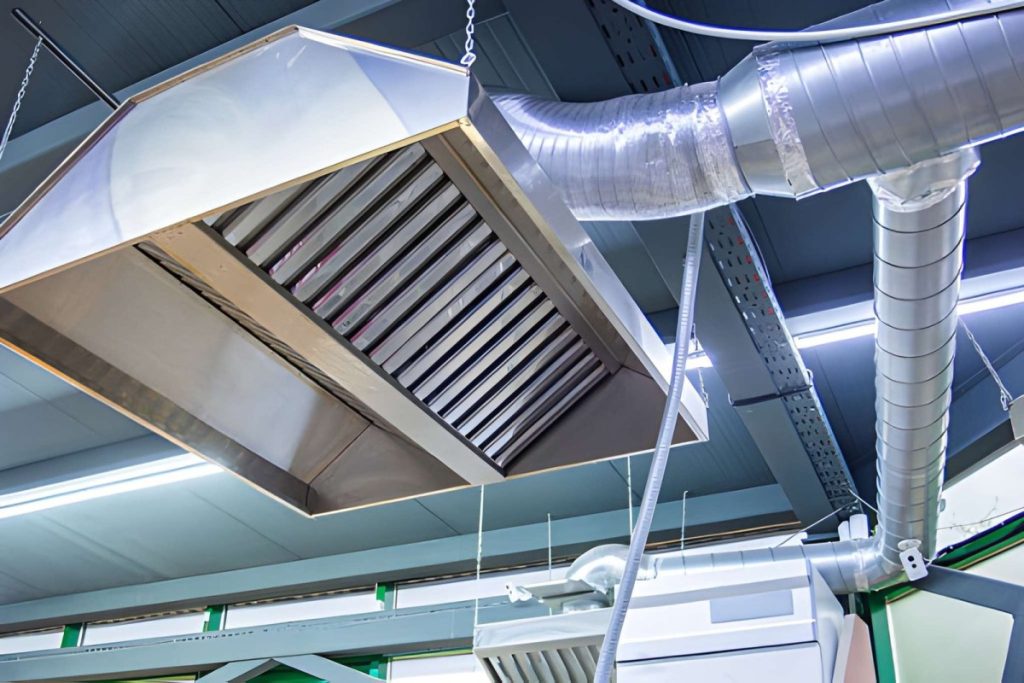
Most restaurant operators think of hood cleaning as a compliance task. But the condition of your exhaust system has a direct effect on how much energy your kitchen uses every month.
A grease-laden exhaust system forces fans to work harder, draws more electricity, and puts added strain on connected HVAC equipment — all of which shows up on your utility bill. Keeping that system clean reduces airflow resistance and lets equipment run at the efficiency it was designed for.
For commercial kitchens in Detroit and Greater Michigan, that translates to measurable cost savings over time. This article covers how exhaust system maintenance connects to energy performance and what that means for your operating costs.
Key Takeaways
- A dirty exhaust system reduces airflow efficiency, causing fans and HVAC equipment to consume more energy than necessary.
- Regular professional cleaning restores system performance and can lead to lower monthly utility bills for commercial kitchens.
- Consistent exhaust maintenance reduces equipment strain, which extends the lifespan of fans and lowers long-term operational costs.
How Well-Maintained Exhaust Systems Improve Energy Efficiency
Grease buildup and restricted airflow are the two main reasons commercial kitchen exhaust systems consume more energy than necessary. Keeping these systems clean and properly balanced directly reduces the load on exhaust fans and HVAC equipment.
Impact of Grease and Debris Buildup on System Performance
When grease and debris accumulate inside exhaust hoods, ductwork, and fans, the system has to work harder to move the same volume of air. This added resistance forces fan motors to draw more power, increasing energy consumption.
Key effects of buildup on performance:
- Fan motor strain – Motors run longer and at higher loads to compensate for restricted airflow
- Reduced capture velocity – The hood becomes less effective at pulling smoke and heat, requiring the system to run at higher speeds
- Heat retention – Grease-coated surfaces trap heat inside the duct, adding thermal load to the kitchen environment
A heavily grease-laden system can increase fan energy use by a measurable margin compared to a clean one. Regular cleaning removes this resistance and allows the system to operate at its designed efficiency.
Role of Airflow Optimization in Reducing Energy Consumption
A balanced exhaust system moves the correct volume of air without overworking the fan. When airflow is optimized, the system doesn’t need to compensate for blockages or imbalances by running at excess capacity.
Proper airflow balance also reduces the demand on makeup air units, which condition and replace exhausted air. These units are among the highest energy consumers in a commercial kitchen.
Airflow optimization benefits:
| Factor | Effect on Energy Use |
| Correct exhaust-to-makeup air ratio | Reduces HVAC compensation load |
| Clean fan blades | Maintains designed CFM at lower motor effort |
| Unobstructed ductwork | Minimizes static pressure and fan runtime |
Routine inspection and cleaning are the most direct ways to keep airflow within design specifications and avoid unnecessary energy draw.
Cost Savings and Operational Benefits for Commercial Kitchens
Regular exhaust system cleaning directly reduces utility costs and extends the working life of ventilation equipment, both of which have a measurable impact on a kitchen’s bottom line.
Reduction in Utility Expenses with Regular Cleaning
Grease and debris buildup forces exhaust fans to work harder to move the same volume of air. That extra strain translates directly into higher electricity consumption. Keeping hoods and exhaust systems clean allows fans to operate at their intended efficiency.
The ventilation system is typically the largest energy consumer in a commercial kitchen. Demand-controlled ventilation studies have shown energy reductions of up to 51% when airflow is properly managed. Clean systems are a prerequisite for getting that kind of performance.
Key factors that influence utility savings:
- Kitchen size – larger spaces have more fans running longer hours
- Cooking volume – higher output means faster grease accumulation
- Cleaning frequency – more consistent cleaning prevents the efficiency losses that compound over time
- Fan count – more exhaust fans means more equipment affected by restriction
Long-Term Equipment Longevity and Maintenance Savings
When fans run harder than necessary due to restricted airflow, motors wear out faster. Bearings, belts, and motor windings all degrade more quickly under sustained overload. Replacing a commercial exhaust fan motor can cost anywhere from $300 to over $1,500 depending on the unit.
Routine cleaning also reduces the frequency of emergency service calls. Unplanned repairs typically cost significantly more than scheduled maintenance visits.
| Maintenance Type | Typical Cost Range |
| Scheduled hood cleaning | $150–$500 per service |
| Emergency fan motor repair | $300–$1,500+ |
| Full fan motor replacement | $500–$2,000+ |
Preventing buildup keeps the entire system running within normal operating parameters, which means fewer breakdowns and more predictable maintenance costs.