
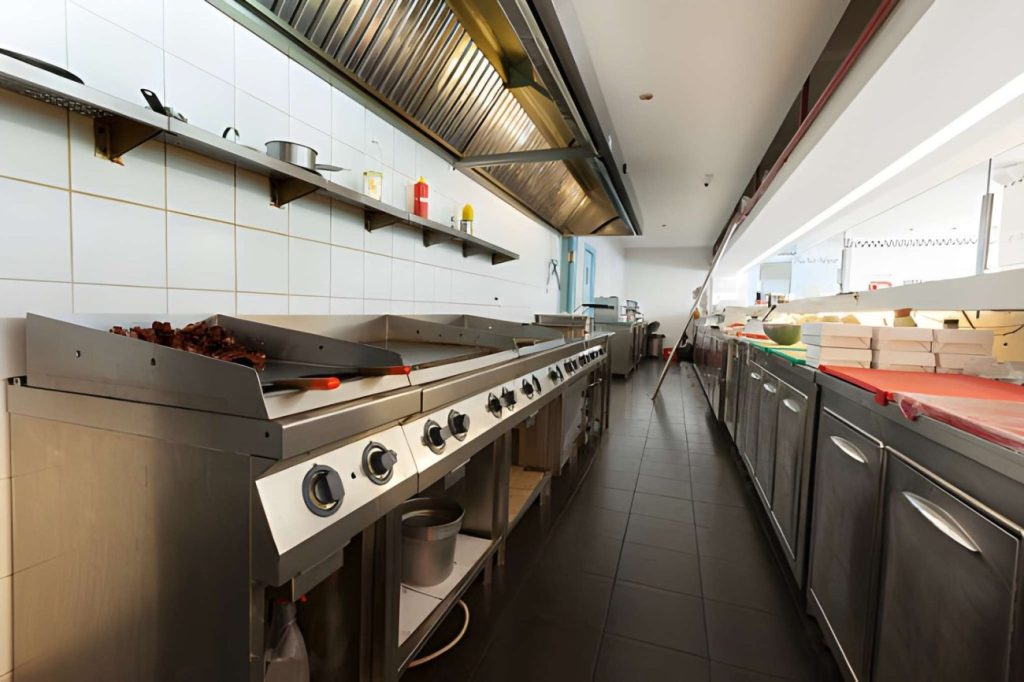
Michigan health inspectors evaluate far more than food temperatures and handwashing stations when they walk into a commercial kitchen. The exhaust hood system, ductwork, filters, and ventilation fans are consistently among the most scrutinized components during an inspection.
Failing to maintain a clean and properly functioning hood system is one of the most common reasons Michigan restaurants receive violations or fail inspections entirely. Grease buildup in hoods and ducts creates a direct fire hazard and signals to inspectors that a kitchen may not be meeting NFPA 96 standards or local health codes.
Knowing exactly what inspectors look for — and what triggers a violation — gives kitchen operators a clear advantage. This article breaks down the specific criteria Michigan health inspectors check, the most frequent violations found in commercial kitchens, and what you can do to stay compliant.
Key Takeaways
- Michigan health inspectors assess the full kitchen environment, including equipment condition, sanitation practices, and fire safety systems
- The exhaust hood and ventilation system are among the most closely evaluated components and a leading source of violations
- Understanding the inspection process and common failure points helps kitchen operators address compliance issues before an inspector arrives
Critical Safety Criteria in Michigan Commercial Kitchens
Michigan health inspectors focus heavily on food storage temperatures, surface sanitation, employee hygiene, and cross-contamination barriers. These areas carry the most weight during an inspection and are the most common sources of violations.
Food Storage and Temperature Control
The Michigan Food Law requires food to be stored at specific temperatures to prevent bacterial growth. Inspectors verify both hot and cold holding with calibrated thermometers.
Key temperature thresholds:
| Food Type | Required Temperature |
| Cold holding | 41°F or below |
| Hot holding | 135°F or above |
| Cooling (first 2 hours) | 135°F to 70°F |
| Cooling (next 4 hours) | 70°F to 41°F |
Raw proteins must be stored below ready-to-eat foods in refrigeration units. Inspectors check shelf order, container labels, and date markings. Unlabeled or undated food is a common violation.
Dry goods must be stored at least 6 inches off the floor. Any food stored near chemicals or cleaning supplies will result in a critical violation.
Sanitation of Food Contact Surfaces
All surfaces that come into direct contact with food must be cleaned and sanitized on a documented schedule. This includes cutting boards, prep tables, slicers, and utensils.
Inspectors check that sanitizer solutions are mixed at the correct concentration. For chlorine-based sanitizers, the standard range is 50–100 ppm. Quaternary ammonium solutions typically require 200–400 ppm, depending on the manufacturer’s instructions.
Common violations include:
- Sanitizer buckets with no solution or incorrect concentration
- Food residue on slicers or can openers
- Wet wiping cloths stored outside of sanitizer solution
- Cutting boards with deep grooves that trap bacteria
Test strips must be available and used regularly to verify sanitizer strength.
Personal Hygiene Standards
Employees are required to wash their hands at designated hand-washing sinks only. These sinks must be stocked with soap and paper towels at all times. Using a prep sink for hand washing is a direct violation.
Inspectors observe whether employees wash hands after handling raw meat, using the restroom, touching their face, or switching tasks. Hand washing must last at least 20 seconds.
Additional requirements:
- Hair restraints for all employees working with food
- No bare-hand contact with ready-to-eat foods
- Clean outer garments and aprons
- Employees with open wounds must use bandages covered by gloves
Sick employees must not handle food. Michigan follows FDA Food Code guidelines requiring that employees with vomiting, diarrhea, or jaundice be excluded from food handling duties.
Prevention of Cross-Contamination
Cross-contamination is one of the leading causes of foodborne illness. Inspectors look for physical separation between raw and ready-to-eat foods during prep, storage, and cooking.
Color-coded cutting boards are not legally required in Michigan but are strongly associated with compliant kitchens. What is required is that equipment used for raw proteins is cleaned and sanitized before being used for other foods.
Inspectors specifically check:
- That raw chicken, beef, and seafood are stored separately and in the correct vertical order
- That single-use gloves are changed between tasks
- That food is not prepared near mop buckets or chemical storage
- That allergen separation procedures are in place and followed
Inspection Procedures and Common Violations
Michigan inspectors follow the Michigan Modified Food Code during unannounced visits, evaluating everything from cooking equipment temperatures to hood system maintenance and paperwork. Priority and priority foundation violations must be corrected within 10 calendar days; core violations allow up to 90 days.
Cooking Equipment Compliance
Inspectors check that all cooking equipment operates at correct temperatures and is properly maintained. This includes verifying that hot-held food stays at or above 135°F and cold-held food stays at or below 41°F.
Common violations in this category include:
- Improper holding temperatures for cooked or ready-to-eat foods
- Food stored directly on the floor or in unapproved containers
- Cross-contamination risks from raw meat stored above ready-to-eat items
- Equipment surfaces with visible grease buildup or food residue
The inspector will speak with the Person in Charge (PIC) to assess whether staff understand temperature control requirements and have a risk control plan in place.
Ventilation and Hood System Requirements
Hood systems are inspected for grease accumulation, proper airflow, and overall condition. A clogged or poorly maintained exhaust system is a fire hazard and a direct compliance issue.
Inspectors look for:
- Grease buildup on filters, ductwork, and hood surfaces
- Damaged or missing baffle filters
- Inadequate exhaust fan function, which affects smoke and vapor removal
- Lack of access panels for internal duct cleaning
Regular professional hood cleaning and inspection is the most reliable way to avoid violations in this area. Grease accumulation is one of the most cited issues in commercial kitchen inspections across Michigan.
Documentation and Record-Keeping
Inspectors review written records to confirm that food safety practices are actually being followed, not just claimed. Missing or incomplete documentation is treated as a priority foundation violation.
Required documentation typically includes:
| Document | Purpose |
| Temperature logs | Verify consistent holding and cooking temps |
| Cleaning schedules | Confirm hood and equipment maintenance frequency |
| Employee food handler certifications | Demonstrate trained staff |
| Pest control records | Show active prevention measures |
The Person in Charge must be able to produce these records on request. Gaps in documentation can result in violations even when the physical kitchen appears compliant.
Structural Maintenance Issues
Structural violations cover the physical condition of the kitchen itself. These are typically classified as core violations, giving establishments up to 90 days to correct them.
Inspectors flag issues such as:
- Cracked or damaged floor tiles that trap moisture and bacteria
- Walls or ceilings with peeling paint or unsealed gaps
- Inadequate lighting over food prep surfaces
- Drain lines or plumbing that aren’t functioning properly
While structural issues carry a longer correction window, repeated citations can affect licensing. Keeping surfaces sealed, intact, and cleanable is a baseline expectation under the Michigan Food Code.