
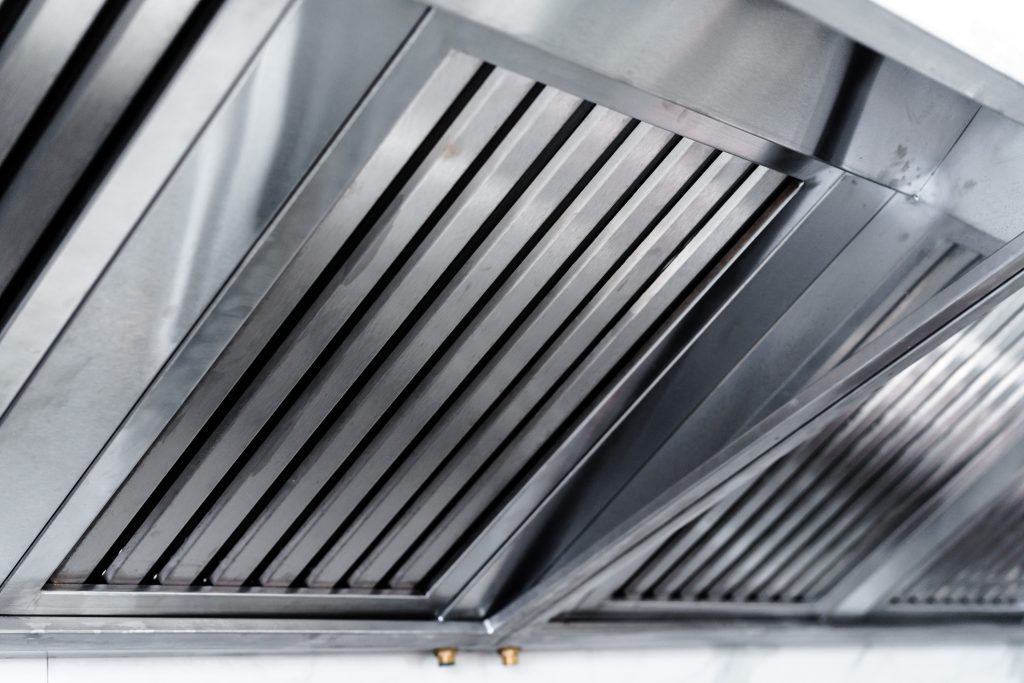
Commercial kitchen exhaust fans work around the clock to remove grease, smoke, and heat from busy kitchens. When hood cleaning is done incorrectly or skipped entirely, these critical components face serious damage that compounds over time.
Improper hood cleaning allows grease buildup to coat exhaust fan blades, motors, and housing, creating excessive strain that leads to premature equipment failure and costly repairs. The accumulated grease forces fans to work harder to maintain proper airflow, which increases energy consumption and accelerates wear on mechanical parts.
Restaurant owners who neglect proper maintenance often discover the true cost when their exhaust systems break down during peak service hours. Understanding how inadequate cleaning practices destroy expensive equipment can help kitchen operators protect their investment and avoid unexpected downtime.
Key Takeaways
- Grease accumulation from poor cleaning causes exhaust fans to work harder and fail sooner
- Equipment damage from neglected maintenance leads to thousands of dollars in repair costs
- Professional cleaning every 3-6 months prevents costly breakdowns and extends system lifespan
How Improper Hood Cleaning Harms Exhaust Fans
Inadequate hood cleaning creates a cascade of problems that progressively damage exhaust fan systems through grease accumulation, restricted airflow, and excessive mechanical stress. These issues compound over time, leading to premature equipment failure and costly repairs.
Build-Up of Grease and Debris
Grease particles and cooking debris accumulate on fan blades when cleaning procedures are incomplete or performed incorrectly. This buildup creates an unbalanced rotating assembly that places additional stress on the motor bearings and mounting hardware.
The sticky nature of grease attracts dust, food particles, and other airborne contaminants. These substances form thick, hardened deposits that alter the aerodynamic properties of the fan blades. The changed blade profile reduces the fan’s ability to move air efficiently.
Common areas where buildup occurs:
- Fan blade surfaces and edges
- Motor housing and electrical components
- Bearing assemblies and shaft connections
- Protective guards and mounting brackets
Hardened grease deposits require significantly more force to remove during cleaning. This often leads to damage of fan components during aggressive cleaning attempts or forces operators to replace parts that could have been saved with proper maintenance.
Reduced Airflow and Ventilation Efficiency
Accumulated grease and debris restrict the fan’s ability to move air through the exhaust system. The buildup acts like a partial obstruction that forces the motor to work harder to achieve the same airflow rates.
Reduced airflow creates a feedback loop of problems. Poor ventilation allows more grease-laden air to remain in the system longer, accelerating the accumulation process. Kitchen staff may respond by running fans at higher speeds or for longer periods.
The restriction also affects the entire exhaust system’s balance. Ductwork, filters, and other components experience altered pressure dynamics that can lead to vibration, noise, and additional wear throughout the system.
Smoke and cooking odors that linger in the kitchen indicate compromised airflow efficiency. These symptoms often appear before visible damage to the fan itself becomes apparent.
Increased Motor and Fan Wear
Motors operating under increased load due to grease buildup consume more electricity and generate excess heat. The additional thermal stress shortens motor life and increases the likelihood of electrical component failure.
Unbalanced fan assemblies create vibration that damages bearings, shafts, and mounting hardware. This mechanical stress propagates through the entire system, affecting ductwork connections and structural supports.
Key wear indicators include:
- Unusual noise during operation
- Vibration in mounting hardware
- Increased energy consumption
- Frequent motor overheating
The combination of thermal and mechanical stress accelerates component degradation. Motors may experience winding failure, bearing seizure, or control circuit problems that require complete replacement rather than simple repairs.
Fan blades subjected to grease buildup and resulting imbalances can develop stress fractures or complete failures. These failures often occur without warning and can cause additional damage to surrounding equipment and ductwork.
Long-Term Effects and Risks for Commercial Kitchens
Inadequate hood cleaning creates cascading problems that compound over months and years of operation. Commercial kitchens face equipment breakdowns, safety violations, and expensive emergency repairs when maintenance protocols fail.
Premature Exhaust Fan Failure
Grease buildup forces exhaust fans to work harder to maintain proper airflow, leading to motor strain and bearing damage. The accumulated residue acts as an insulator, causing motors to overheat and components to wear faster than their designed lifespan.
Common failure points include:
- Motor bearings seizing from excessive heat
- Fan blades becoming unbalanced from grease weight
- Electrical connections corroding in grease-laden environments
Most commercial exhaust fans are designed to operate for 10-15 years with proper maintenance. Without regular cleaning, this lifespan drops to 3-5 years. Replacement costs range from $2,000 to $8,000 per fan, not including installation and downtime expenses.
Grease also reduces fan efficiency by up to 40%, forcing HVAC systems to compensate with increased energy consumption. This creates additional operational costs that accumulate monthly.
Fire Hazards Linked to Neglected Maintenance
Accumulated grease in exhaust systems creates highly combustible conditions that can rapidly spread fires throughout the ventilation network. NFPA 96 regulations require regular cleaning specifically because grease residue acts as fuel for kitchen fires.
Fire risks increase exponentially when grease buildup exceeds safe levels. A small cooking fire can travel through contaminated ductwork to the roof, potentially destroying entire buildings. Insurance claims from exhaust system fires average $165,000 per incident.
Key fire hazard indicators:
- Visible grease dripping from hood surfaces
- Reduced airflow despite fan operation
- Strong odors during cooking operations
Commercial kitchens with poor maintenance face fire department citations and potential closure orders. Health departments can shut down operations immediately when exhaust systems pose fire risks.
Costly Repairs and Downtime
Deferred maintenance creates expensive repair scenarios that far exceed regular cleaning costs. Emergency repairs typically cost 3-5 times more than preventive maintenance, especially when equipment fails during peak business hours.
Major repair categories include:
- Ductwork replacement: $15,000-$50,000 per system
- Motor rebuilds: $1,500-$3,500 per unit
- Hood component replacement: $5,000-$12,000
Downtime costs often exceed repair expenses. Restaurants lose an average of $2,500 per day when kitchen operations stop. Emergency repairs can take 48-72 hours to complete, particularly when specialized parts require ordering.
Equipment failures during health inspections result in automatic violations and mandatory closure periods. These shutdowns damage business reputation and customer relationships beyond immediate financial losses.