
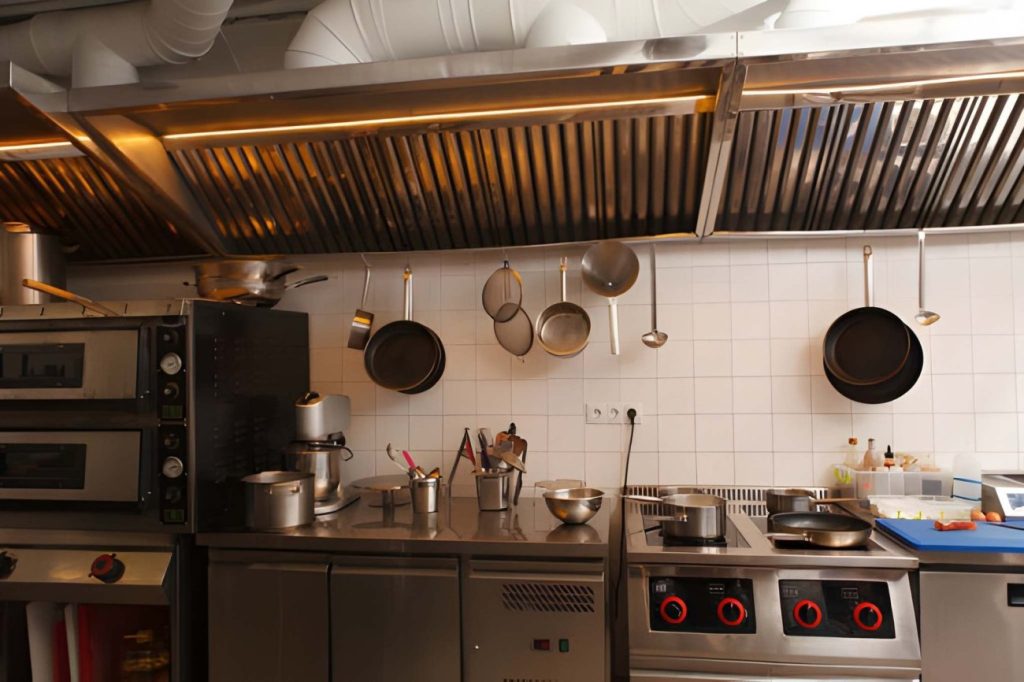
Seafood restaurants face hood cleaning challenges that most other commercial kitchens don’t. The combination of high-moisture cooking, fish oils, and strong odors creates a grease buildup profile that behaves differently than what accumulates in a burger joint or pizza kitchen.
Seafood cooking produces a unique mix of fine grease particles, moisture, and protein residue that coats hood systems faster and requires more specialized cleaning approaches to stay compliant with NFPA 96 standards. Ignoring these differences can lead to failed inspections, fire hazards, and odor problems that affect the dining experience.
Hood Safe LLC works with Detroit-area seafood restaurants that run into these exact issues. Understanding what makes seafood kitchens different is the first step toward keeping your exhaust system clean and your operation running without problems.
Key Takeaways
- Seafood cooking generates moisture-heavy, protein-rich grease that builds up in hood systems faster than typical kitchen cooking
- High-volume seafood operations often require more frequent cleaning schedules to stay within fire safety and compliance standards
- Proper cleaning protocols for seafood restaurants must account for the specific residue types that standard approaches may not fully address
Ventilation Demands of Seafood Cooking
Seafood cooking produces high moisture, persistent odors, and corrosive salt residue that place distinct stress on commercial hood systems compared to standard restaurant kitchens.
High-Moisture Emissions from Seafood Preparation
Steaming, poaching, and boiling seafood releases large volumes of water vapor into the kitchen air. This moisture loads the exhaust system quickly, especially in restaurants that run steamers or large stock pots continuously during service.
High humidity in the exhaust stream creates two problems. First, it reduces the efficiency of grease filters by saturating them faster. Second, moisture mixes with grease aerosols to form a sticky, dense residue inside the ductwork that is harder to remove than dry grease deposits.
Kitchens that steam clams, mussels, or lobster at volume are particularly affected. These cooking methods push sustained bursts of steam that standard exhaust rates may struggle to fully capture without the right hood sizing and CFM output.
Frequent Odor Management Challenges
Seafood odors are more volatile and more noticeable than those from most other proteins. Compounds like trimethylamine, which causes the characteristic fish smell, become airborne quickly during cooking and cling to surfaces if not captured at the source.
Odor control in a seafood kitchen depends on the hood capturing emissions at the point of generation, before they spread. A hood that is undersized, poorly positioned, or operating at insufficient exhaust velocity will allow odors to escape into the dining area or surrounding spaces.
This is not just a comfort issue. Persistent odor complaints can affect customer retention and create tension with neighboring businesses in shared buildings.
Salt and Residue Accumulation
Cooking seafood — particularly shellfish, brined fish, or items prepared with saltwater — introduces salt particles into the exhaust stream. Salt is corrosive to metal surfaces, including stainless steel ductwork, hood components, and exhaust fans.
Over time, salt deposits combine with grease and moisture to form a layered buildup that:
- Accelerates corrosion on duct seams and fan housings
- Reduces airflow by narrowing interior duct surfaces
- Increases fire risk by creating thicker, harder-to-clean grease accumulation
Standard cleaning intervals designed for burger or pizza kitchens are often not sufficient for seafood operations running high-volume shellfish or brining stations.
Compliance Issues and Cleaning Protocols
Seafood restaurants face stricter scrutiny than most commercial kitchens because grease buildup, moisture, and fish residue create compounding risks that inspectors and fire marshals take seriously.
Strict Health Code Requirements
Seafood processing and restaurant environments fall under FDA seafood HACCP regulations, which require operators to identify food safety hazards and implement documented control plans. Hood cleaning is part of that picture. Grease and fish residue in exhaust systems can harbor bacteria, and health inspectors expect cleaning logs as proof of compliance.
Failure to comply can result in:
- Fines from local health departments
- Forced closure pending corrective action
- Failed inspections that become public record
Cleaning frequency requirements depend on cooking volume and method. High-volume seafood operations that use fryers and open-flame cooking typically fall into the monthly cleaning category under NFPA 96 standards. Light-use kitchens may qualify for quarterly cleaning, but seafood restaurants rarely meet that threshold given their output.
Mitigating Fire Hazards in Seafood Kitchens
Fish oils and fats have lower smoke points than many other cooking fats, which means they vaporize and deposit onto hood surfaces faster. That buildup ignites more readily, making cleaning frequency a direct fire safety variable, not just a regulatory checkbox.
NFPA 96 sets the baseline standard for commercial kitchen exhaust system cleaning. Key requirements include:
| Factor | NFPA 96 Guideline |
| High-volume cooking | Monthly cleaning |
| Solid fuel cooking | Monthly or more |
| Inspection access | Required at all duct sections |
| Grease filters | Cleaned or replaced regularly |
Technicians must clean the full system—filters, plenum, ducts, and fans—not just the visible hood surfaces. Partial cleaning leaves grease in ducts where it’s harder to detect and more dangerous if ignited.