
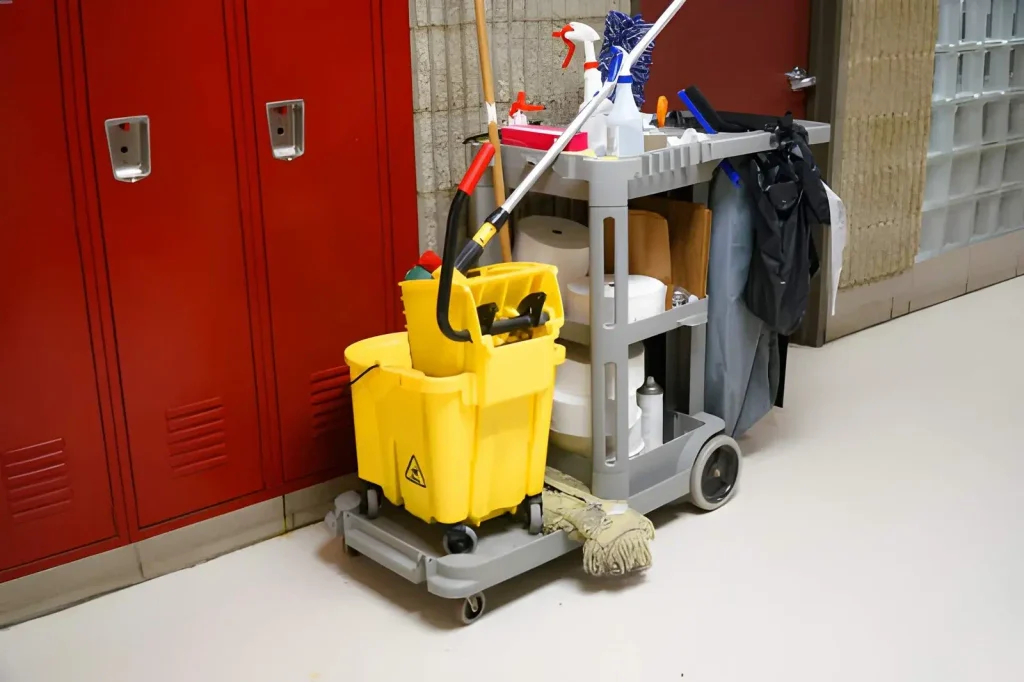
Gymnasiums, cafeterias, and locker rooms each present different cleaning challenges, and a single cleaning protocol cannot address all three effectively. Facilities directors and athletic directors need space-specific cleaning plans that account for surface type, moisture levels, food contact, and foot traffic patterns. A gym floor requires different products and frequency than a cafeteria table or a shower stall.
Treating every area of a school or athletic facility the same way creates gaps in hygiene and increases the risk of bacteria growth, equipment damage, or food safety violations. Gymnasium floors need protection from sweat and friction during daily use. Cafeterias require cleaning schedules that align with meal service to meet food safety standards. Locker rooms demand moisture control to prevent mold and bacterial buildup in showers and shared spaces.
This article breaks down the specific cleaning protocols needed for each of these three high-traffic areas. It outlines what separates effective cleaning practices in gyms, cafeterias, and locker rooms, and why a one-size-fits-all approach falls short.
Key Takeaways
- Different areas of a facility require distinct cleaning protocols based on their specific use and risk factors.
- Gym floors and shared equipment need targeted care to prevent damage and reduce bacteria transfer.
- Cafeterias and locker rooms each require attention to food safety standards and moisture control, respectively.
Set Cleaning Priorities by Space and Use
Gymnasiums, cafeterias, and locker rooms each carry distinct contamination risks and require tailored cleaning schedules rather than a single building-wide standard. Effective prioritization starts with separating routine cleaning from disinfection, then calibrating frequency to how each space is actually used.
Distinguish Routine Cleaning From Disinfection
Routine cleaning removes dirt, dust, and debris from surfaces. Disinfection kills pathogens and requires EPA-registered products applied according to label dwell times.
These are not interchangeable tasks. A gym floor swept daily still needs disinfection on mats and shared equipment after each use period.
| Space | Routine Cleaning | Disinfection Priority |
|---|---|---|
| Gymnasium | Sweeping, dusting bleachers | Mats, equipment handles, shared gear |
| Cafeteria | Floor mopping, trash removal | Tables, trays, condiment stations |
| Locker Room | Floor sweeping, mirror wiping | Benches, shower floors, door handles |
Staff need clear direction on which product applies where, since bleach-based disinfectants can damage athletic flooring or metal lockers if misapplied.
Match Frequency to Traffic, Activities, and Risk
Cafeterias require sanitizing between lunch shifts, not just once daily, since food contact surfaces accumulate bacteria quickly during turnover. Tables and chairs should be wiped after every seating group.
Locker rooms demand attention tied to practice and game schedules. Moisture from showers creates conditions for mold and bacterial growth, so floors and drains need daily attention during active sports seasons.
Gymnasiums see variable use depending on whether they host PE classes, team practices, or community events. A facility hosting back-to-back activities needs spot-cleaning between sessions, not just an end-of-day pass.
Risk level should guide frequency more than a fixed calendar. High-touch points like door handles, light switches, and shared equipment warrant multiple daily disinfection cycles regardless of space type.
Document Procedures and Staff Responsibilities
Written protocols remove ambiguity about who cleans what and when. Each space should have a posted checklist specifying tasks, products, and timing.
Assign ownership by shift or zone so accountability is clear. For example, one custodian handles cafeteria turnover cleaning while another manages locker room disinfection after athletic periods.
Include product-specific instructions, such as required dwell times and dilution ratios, directly on checklists to reduce training gaps. Documentation also supports compliance reviews and helps new staff onboard faster without relying on verbal instructions alone.
Protect Gymnasium Floors and Shared Equipment
Gymnasium floors represent a significant capital investment, and the wrong cleaning product or technique can cause permanent damage, warping, or dangerous slip hazards. Shared equipment presents a separate risk entirely, since sweat and skin contact make mats, balls, and weights common vehicles for bacterial and fungal transmission.
Use Floor-Compatible Products and Methods
Most gym floors are finished hardwood, synthetic sport court, or rubber, and each surface reacts differently to moisture and chemicals.
Hardwood floors require dry or near-dry cleaning methods. Standing water or excessive liquid can seep between boards and cause warping or buckling over time.
Avoid ammonia-based or oil-soap cleaners on finished wood, as these break down the sealant finish and reduce traction.
Synthetic and rubber flooring typically tolerate water-based cleaners better, but directors should still confirm chemical compatibility with the manufacturer before adopting any product.
A few baseline rules apply across floor types:
- Dust mop daily to remove grit that causes scratching
- Damp mop only with manufacturer-approved cleaners
- Never use wax or polish on athletic flooring unless specified by the manufacturer
- Schedule deep cleaning and resealing on an annual or seasonal basis
Address High-Touch Equipment and Event Turnover
Shared equipment needs disinfection between uses, not just at the end of the day. Mats, balance beams, free weights, and resistance bands should be wiped down with an EPA-registered disinfectant after each class or practice session.
Pay attention to dwell time. Many disinfectants require the surface to stay visibly wet for a set period, often one to four minutes, to actually kill pathogens.
Event turnover adds another layer of demand. Gymnasiums used for assemblies, tournaments, or community events require a rapid but thorough reset: bleachers wiped down, floors spot-checked for debris or moisture, and equipment returned to sanitized storage.
Facilities directors should build turnover time into event scheduling rather than treating cleaning as an afterthought squeezed between activities.
Maintain Cafeteria Hygiene Around Food Service
Cafeterias carry a higher food safety risk than other shared spaces because surfaces come into direct contact with food. Facilities and athletic directors need protocols that address contact surfaces, waste disposal, and the high-volume traffic of meal periods.
Follow Food-Contact Surface Requirements
Any surface touching food, trays, or utensils requires a different cleaning standard than general surfaces. Cleaning removes visible debris, but sanitizing reduces pathogens to safe levels and is the step that protects against foodborne illness.
Tables, serving lines, and prep counters need sanitizing after every meal period, not just at the end of the day. Use an EPA-registered sanitizer appropriate for food-contact surfaces, and follow the manufacturer’s required contact time before wiping dry.
Key points for staff training:
- Separate cloths or color-coded systems for food-contact surfaces versus floors or restrooms prevent cross-contamination.
- Sanitizer concentration should be checked with test strips, not estimated by eye.
- Equipment such as tray slides and condiment stations needs attention since they’re handled repeatedly throughout service.
Skipping sanitizing steps, even when a surface looks clean, creates risk that isn’t visible to staff or students.
Manage Spills, Waste, and Peak Meal Periods
Spills in a cafeteria need faster response than in other facility areas because food residue attracts pests and creates slip hazards. Staff should be positioned to address spills within minutes, not at the end of a shift.
Waste management requires a schedule tied to meal volume rather than a fixed time. A cafeteria serving 500 students at lunch generates far more trash in one hour than a locker room does in a full day.
Peak meal periods demand a different staffing approach:
| Task | Timing |
|---|---|
| Trash removal | Every 30–45 minutes during service |
| Spot-mopping spills | Immediately upon occurrence |
| Trash can liner replacement | Before overflow, not after |
| Full floor cleaning | After each meal period ends |
Short-staffing during rush periods leads to delayed spill response, which increases both injury risk and pest activity.
Control Moisture and Contamination in Locker Rooms
Locker rooms combine high skin contact with constant moisture, which makes them a primary site for bacterial and fungal growth. Facilities directors need protocols that address both surface disinfection and the environmental conditions that allow pathogens to spread.
Clean Showers, Drains, Benches, and Lockers
Shower floors and drains require daily disinfection with an EPA-registered product effective against staph and fungal organisms. Drains should be flushed and scrubbed, not just rinsed, since biofilm builds up inside the pipe walls.
Benches and locker surfaces need wiping down at least once per day, more often during multi-team practice schedules. Door handles and locker vents are frequently missed but carry high bacterial loads from repeated hand contact.
A practical cleaning order:
- Showers and drains – scrub and disinfect daily
- Benches – wipe with disinfectant after each heavy-use period
- Locker exteriors and handles – disinfect daily
- Locker interiors – clean weekly or between seasonal sports changes
Staff should use color-coded cloths or separate tools for shower areas versus locker areas to avoid cross-contamination.
Prevent Odors, Mold, and Slippery Floors
Odor control starts with moisture removal, not air fresheners. Exhaust fans should run continuously during and after peak usage hours to reduce humidity levels that support mold growth.
Floor mats and grout lines need regular scrubbing, since trapped moisture in these areas is a common mold source. Standing water on shower and locker room floors also creates slip hazards, so squeegeeing floors after each use period reduces both risk factors.
Slip-resistant floor treatments can lower injury risk in wet zones. Staff should check floor drains weekly for clogs that cause water pooling. Dehumidifiers in enclosed locker rooms with poor ventilation can further limit mold development between deep cleanings.