
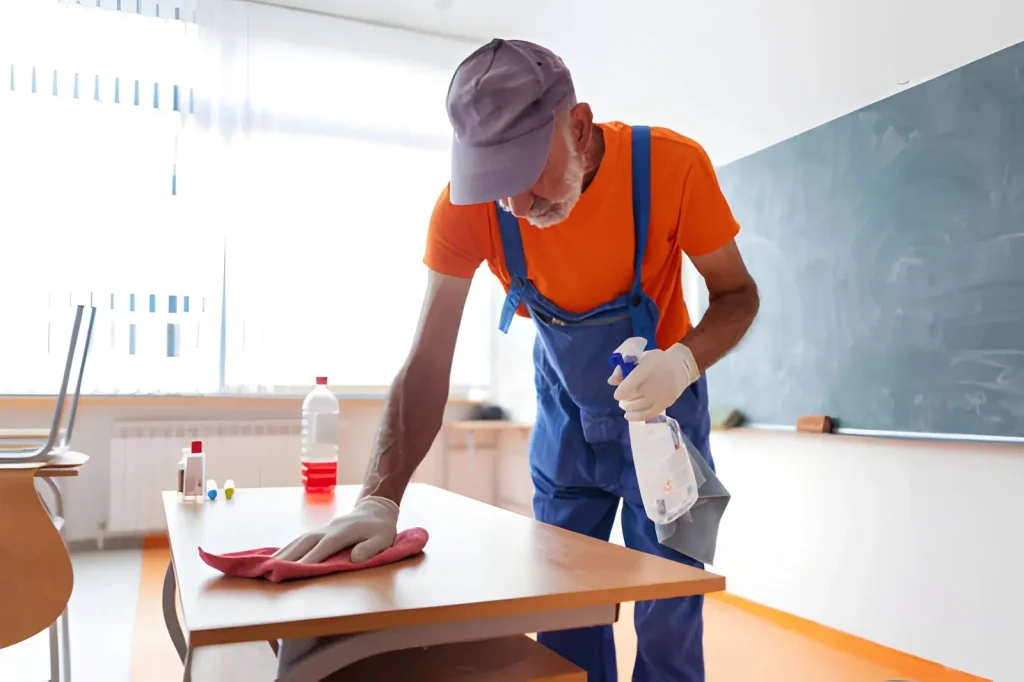
Classroom illness outbreaks disrupt learning and strain school resources, and many of them trace back to surfaces that go too long between cleanings. Desks, shared supplies, and high-touch areas like door handles and light switches collect germs throughout the day. Increasing cleaning frequency on high-touch surfaces is one of the most effective, low-cost ways principals and facilities staff can reduce absenteeism linked to colds, flu, and stomach illness.
Research on classroom cleaning programs has shown a measurable link between surface contamination levels and student absences due to illness. Schools that establish clear cleaning schedules, rather than relying on inconsistent or infrequent cleaning, see fewer illness-related disruptions. The challenge for administrators is determining which surfaces need attention most often and how to build a routine that staff can realistically maintain.
This article breaks down how cleaning frequency affects illness transmission, how to prioritize surfaces by risk level, and how to put a practical schedule into place. It also covers how to review and adjust that schedule over time so it continues to work as conditions in your school change.
Key Takeaways
- Cleaning frequency directly affects how easily illness spreads between students and staff.
- Prioritizing high-touch surfaces based on risk helps schools use cleaning resources more effectively.
- A consistent, regularly reviewed cleaning schedule supports long-term reductions in illness-related absenteeism.
How Cleaning Helps Limit Illness Transmission
Germs travel quickly through classrooms because students share desks, supplies, and close physical space for hours each day. Consistent cleaning schedules, paired with the correct use of disinfectants, reduce the amount of infectious material available to spread between students.
How Germs Spread in Shared Classrooms
Classrooms create ideal conditions for germ transmission. Students touch the same desks, doorknobs, pencils, and electronic devices throughout the day, and many of these surfaces are rarely cleaned between uses.
Respiratory viruses spread through droplets released when a student coughs or sneezes near shared surfaces or other students. Gastrointestinal illnesses often spread through contact with contaminated hands, desks, or shared objects like scissors and keyboards.
Research on classroom hygiene found a direct link between surface contamination levels and student absences from gastrointestinal illness. Desks with higher ATP readings, a measure of biological residue, corresponded to higher rates of illness-related absence.
Common high-contact surfaces include:
- Desktops and tabletops
- Doorknobs and light switches
- Shared electronics, including tablets and keyboards
- Supply bins and art materials
- Sink handles and soap dispensers
When Cleaning Is Enough and When Disinfection Is Needed
Cleaning and disinfecting serve different purposes, and knowing when to use each matters for infection control. Cleaning removes dirt, dust, and some germs from surfaces using soap or detergent and water. It lowers the number of germs present but does not kill them.
Disinfecting uses chemical agents to kill germs on surfaces after cleaning. The CDC recommends disinfection in classrooms when there has been a confirmed illness case, during active outbreaks, or in spaces with higher risk of germ transmission, such as restrooms and nurse’s offices.
Routine daily cleaning is sufficient for most classroom surfaces under normal circumstances. Disinfection becomes necessary when illness is circulating in the school or when surfaces are visibly contaminated with bodily fluids.
| Situation | Recommended Action |
| Routine daily maintenance | Cleaning with soap and water |
| Confirmed illness in classroom | Cleaning followed by disinfection |
| High-touch surfaces during flu season | Increased cleaning frequency, targeted disinfection |
| Visible bodily fluid contamination | Immediate cleaning and disinfection |
Set Cleaning Frequencies by Surface and Risk
Not all surfaces carry the same risk of spreading illness, so cleaning schedules should match contact frequency and contamination potential. Desktops, doorknobs, and shared electronics require more frequent attention than floors or walls.
Prioritize High-Touch Surfaces
Desks, light switches, door handles, and shared tablets or keyboards collect pathogens quickly because dozens of hands touch them each day. These surfaces should be disinfected at least once daily, with wipe-downs between class periods in elementary classrooms where students share desks.
Research on enhanced classroom cleaning protocols found that bi-weekly disinfection of desktops, paired with staff training and monitoring, produced measurably lower biocontamination levels compared to standard routines. This suggests that consistency and verification matter as much as the cleaning product used.
Facilities staff should maintain a checklist specifying which surfaces fall into this category for each room type. A simple reference table helps:
| Surface | Minimum Frequency |
| Desktops | Daily |
| Doorknobs/handles | Daily |
| Shared electronics | Daily |
| Light switches | Daily |
Schedule Shared Equipment and Restroom Cleaning
Shared equipment, including gym gear, art supplies, and science lab tools, moves between multiple students and classrooms, making it a common vector for illness. These items should be wiped down after each use period, not just at the end of the day.
Restrooms require a different schedule entirely. High-traffic school restrooms typically need cleaning and disinfection at least twice during the school day, with additional attention to faucet handles, stall locks, and soap dispensers.
Custodial staff should log cleaning times for both categories to confirm schedules are being followed. This documentation also helps administrators identify gaps if illness rates increase later in the term.
Increase Frequency When Illness Rates Rise
When absenteeism from gastrointestinal or respiratory illness climbs above a school’s typical baseline, cleaning frequency for high-touch surfaces and restrooms should increase temporarily. Doubling desk and doorknob disinfection to twice daily during an active outbreak period is a reasonable response.
Schools should set a clear absenteeism threshold, such as 10% above average daily attendance, that triggers this escalation automatically rather than waiting for a formal outbreak declaration. Facilities staff and school nurses should coordinate so that cleaning adjustments align with reported symptoms.
Once illness rates return to baseline for a sustained period, typically one to two weeks, schools can return to standard cleaning schedules.
Put a Consistent Cleaning Schedule Into Practice
A reliable cleaning schedule depends on clear role assignments, correct use of disinfecting products, and realistic planning around daily school operations. Each piece works together to reduce surface contamination and limit the spread of illness among students and staff.
Assign Tasks Across School Staff and Custodial Teams
Cleaning responsibilities should be divided clearly between custodial staff and classroom teachers. Custodial teams typically handle deep cleaning tasks such as floors, restrooms, and shared spaces, while teachers or aides manage frequently touched surfaces like desks, doorknobs, and shared supplies throughout the day.
Written assignments reduce confusion and gaps in coverage. A simple task chart posted in each classroom or shared digitally with staff can specify who cleans what, and when.
Facilities managers should confirm that custodial staffing levels match the size of the building and number of classrooms. Understaffed buildings often see inconsistent cleaning, particularly in high-traffic areas like cafeterias and gyms.
Follow Product Directions and Required Contact Times
Disinfectants only work when used according to the manufacturer’s instructions. Many products require a specific wet contact time — often one to ten minutes — during which the surface must stay visibly wet to kill pathogens effectively.
Wiping a surface dry too soon reduces the product’s effectiveness, even if the correct disinfectant was used. Staff should be trained to read product labels and understand dilution ratios, since over-diluting a solution weakens its disinfecting power.
Keep a laminated quick-reference sheet near supply storage areas listing contact times for each product in use. This prevents guesswork and supports consistent application across classrooms and shared spaces.
Plan Around Classroom Use and Available Staffing
Cleaning schedules should reflect how often rooms are used and by how many people. High-traffic spaces — such as cafeterias, restrooms, and shared computer labs — need more frequent disinfection than low-use storage rooms or offices.
Facilities staff should build schedules around natural breaks in the day, such as between class periods, during lunch, and after dismissal. This reduces disruption to instruction while still covering key touchpoints.
Staffing shortages are common, so schedules need built-in flexibility. Cross-training a few staff members on basic disinfection tasks can help maintain coverage when custodial teams are short-handed or absent.
Review the Schedule and Make Adjustments
A cleaning schedule is not a static document. It requires regular review to confirm tasks are being completed, supplies are stocked, and priorities match current health conditions in the building.
Track Completed Tasks and Supply Needs
Facilities staff should maintain a log of completed cleaning and disinfecting tasks, whether on paper or through a digital checklist system.
This record identifies gaps before they become patterns. For example, if hallway handrails are consistently missed during morning cleaning, the schedule can be adjusted to assign that task at a different time.
Supply tracking should run alongside task tracking. Low stock of disinfectant wipes, hand soap, or paper towels can halt cleaning routines mid-week.
A simple inventory check, done weekly, prevents this:
- Disinfectant spray or wipes
- Hand soap and sanitizer refills
- Paper towels and tissues
- Gloves for custodial staff
Principals and district facilities managers should review these logs monthly to confirm consistency across classrooms and buildings.
Use Illness Trends and Staff Feedback to Refine Priorities
Absence data offers direct insight into where cleaning efforts should focus. If a specific grade level or classroom shows a spike in illness-related absences, that space may need more frequent disinfection of shared surfaces like desks, doorknobs, and shared supplies.
Staff feedback adds another layer of detail. Teachers and classroom aides notice things facilities staff may not, such as a sink that is rarely used or a high-touch surface overlooked during routine cleaning.
Short, regular check-ins with teachers can surface these observations before they lead to larger outbreaks. Adjustments based on this feedback might include:
- Increasing disinfection frequency in classrooms with higher absence rates
- Adding cleaning steps for surfaces identified by staff
- Shifting supply allocation to rooms with greater need
This approach keeps the schedule responsive rather than fixed, which supports better control over illness spread throughout the school year.