
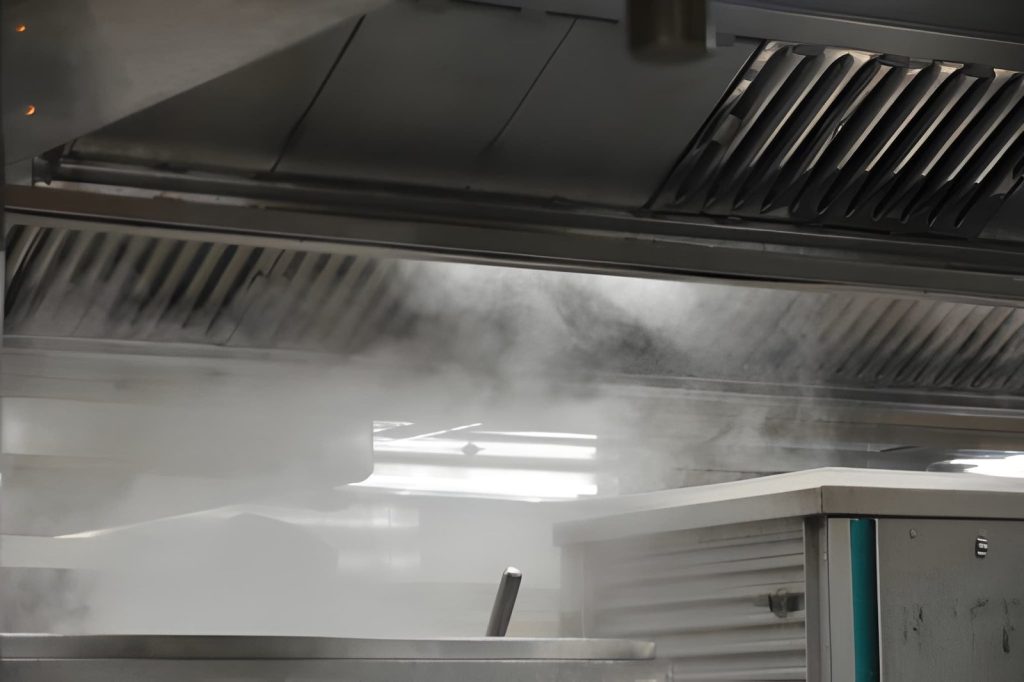
Smokehouse operations present unique fire risks that go far beyond typical commercial kitchen hazards. The combination of high-temperature cooking processes, constant grease production, and extended operating hours creates an environment where exhaust systems accumulate dangerous levels of flammable residue at an accelerated rate.
Grease buildup in smokehouse exhaust systems can ignite from a single spark and spread through the entire ventilation network within seconds, making regular professional cleaning essential for preventing catastrophic fires. Unlike standard kitchen hoods, smokehouse exhaust systems handle continuous smoke and grease-laden air for hours at a time, creating hidden deposits throughout ductwork that remain invisible until it’s too late.
The financial and safety consequences of neglecting smokehouse exhaust maintenance extend far beyond cleanup costs. A single fire can destroy equipment, shut down operations for weeks, and put employees and customers at serious risk. Understanding these hidden dangers and implementing proper maintenance protocols can mean the difference between safe operations and devastating losses.
Key Takeaways
- Smokehouse exhaust systems accumulate dangerous grease deposits faster than standard kitchen hoods due to extended high-temperature operations
- Professional cleaning removes hidden flammable buildup throughout the entire ventilation system that poses serious fire risks
- Regular maintenance prevents equipment damage, operational shutdowns, and protects both employees and customers from fire hazards
Critical Fire Hazards in Smokehouse Exhaust Systems
Smokehouse operations create unique fire risks through concentrated grease deposits, high-temperature environments, and specialized equipment that generates specific combustible residues. These systems face distinct vulnerabilities in ductwork design and component materials that require targeted maintenance approaches to prevent catastrophic fires.
Common Ignition Sources and Residue Accumulation
Smokehouse exhaust systems accumulate multiple types of combustible materials that create significant fire hazards. Grease deposits form rapidly on exhaust surfaces due to the high-fat content of smoked meats and the extended cooking times typical in smokehouse operations.
Primary ignition sources include:
- Hot embers from wood chips or pellets
- Overheated smoking equipment
- Electrical components within exhaust fans
- Static electricity buildup in dry conditions
The residue composition in smokehouses differs from standard commercial kitchens. Creosote buildup occurs alongside grease accumulation, creating a particularly flammable combination. This tar-like substance adheres strongly to exhaust surfaces and burns at extremely high temperatures.
Temperature fluctuations in smokehouse operations cause grease to solidify and liquefy repeatedly. This process creates thick, layered deposits that trap additional particles and increase fire load density throughout the exhaust system.
Vulnerabilities in Ductwork and Exhaust Components
Smokehouse exhaust ductwork faces unique structural challenges that increase fire risks. Horizontal duct runs common in smokehouse designs allow grease to pool rather than drain properly, creating concentrated fire hazards at low points and turns.
Critical vulnerability areas include:
- Duct joints and seams where grease accumulates
- Fan housing areas with limited access for cleaning
- Transition points between different duct materials
- External ductwork exposed to weather conditions
Many smokehouse operations use stainless steel ductwork that can warp under extreme heat, creating gaps where grease escapes and accumulates in wall cavities. Insulation around exhaust ducts becomes saturated with grease vapors over time, creating hidden fire hazards.
Access panels in smokehouse systems often seal poorly due to grease buildup on gaskets and hinges. This allows grease-laden air to escape into surrounding spaces, spreading fire risks beyond the primary exhaust path.
Impact of Inadequate Maintenance on Fire Risk
Delayed maintenance in smokehouse exhaust systems compounds fire risks exponentially due to the unique operating environment. Heavy grease loads and creosote deposits harden over time, making removal increasingly difficult and creating thicker combustible layers.
Inadequate cleaning frequency allows bacterial growth within grease deposits, producing gases that can ignite spontaneously under certain temperature conditions. This biological activity also breaks down grease into more volatile compounds that ignite more easily.
Maintenance deficiencies create cascading risks:
- Reduced airflow increases heat buildup
- Clogged filters force systems to work harder
- Overworked fans generate excessive heat
- Poor ventilation allows combustible vapors to concentrate
Filter replacement schedules designed for standard kitchens prove inadequate for smokehouse operations. The combination of grease, smoke particles, and wood residues clogs filters much faster than anticipated, reducing system efficiency and increasing fire risk within weeks rather than months.
Proactive Fire Prevention for Smokehouses
Effective fire prevention in smokehouse operations requires systematic exhaust system inspections, strategic design considerations, and professional maintenance services. These three pillars work together to create a comprehensive safety framework that protects both personnel and equipment.
Best Practices for Exhaust System Inspection
Regular inspection schedules form the foundation of smokehouse fire prevention. Monthly visual assessments should focus on grease accumulation, structural integrity, and airflow patterns throughout the exhaust system.
Critical Inspection Points:
- Ductwork joints for grease leakage and structural damage
- Fan assemblies for proper operation and debris buildup
- Fire suppression components for functionality and accessibility
- Electrical connections within the exhaust system
Thermal imaging technology provides valuable insights into potential fire hazards. These scans reveal hot spots that indicate excessive grease accumulation or mechanical problems before they become dangerous.
Documentation of each inspection creates accountability and tracks system performance over time. Digital logs enable facility managers to identify patterns and schedule preventive maintenance more effectively.
Professional inspections should occur quarterly to supplement internal assessments. Certified technicians possess specialized equipment and training to detect issues that routine inspections might miss.
Design Strategies for Enhanced Fire Safety
Proper exhaust system design significantly reduces fire risk in smokehouse operations. Adequate ductwork sizing prevents grease-laden vapor from condensing within the system, which creates fuel for potential fires.
Strategic placement of access panels enables thorough cleaning of all system components. These panels should be positioned at directional changes, every 12 feet in horizontal runs, and before equipment connections.
Fire-Resistant Material Selection:
- Stainless steel ductwork with welded joints
- High-temperature gaskets and seals
- Spark-resistant fan components
- Grease removal systems at collection points
Ventilation capacity must match the heat and smoke output of smoking equipment. Undersized systems create backdraft conditions that spread contaminants throughout the facility.
Fire suppression integration requires coordination between exhaust design and suppression system placement. Nozzles must provide adequate coverage without interfering with airflow patterns or maintenance access.
Role of Hood Safe LLC in Reducing Fire Hazards
Hood Safe LLC specializes in comprehensive exhaust system maintenance tailored to smokehouse operations. Their certified technicians understand the unique challenges of wood smoke and meat processing environments.
Professional cleaning services remove accumulated grease and debris that standard maintenance cannot address. This specialized cleaning process focuses on areas where grease typically collects, including horizontal ductwork runs and fan housings.
Service Components Include:
- Complete system disassembly and cleaning
- Fire suppression system testing and maintenance
- Compliance documentation for insurance and regulatory requirements
- Emergency repair services to minimize operational downtime
Their maintenance programs are customized based on cooking volume, equipment type, and facility layout. High-volume operations may require monthly service, while smaller facilities typically benefit from quarterly maintenance schedules.
Emergency response capabilities ensure rapid resolution of exhaust system problems. Hood Safe LLC maintains 24/7 availability for critical repairs that could compromise fire safety or halt production operations.