
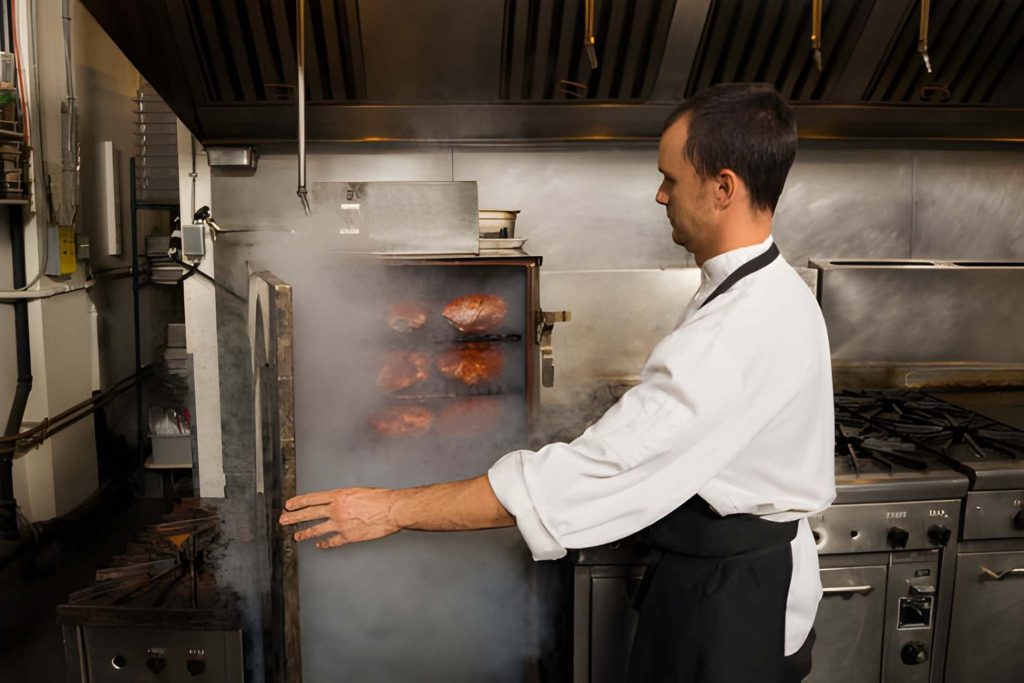
Smokehouses present unique challenges for maintaining clean exhaust systems due to their intensive cooking processes and high grease production. The constant exposure to smoke, oils, and particulates creates accelerated buildup that can pose serious fire hazards if not properly managed.
Most smokehouses require professional hood cleaning every month to maintain fire safety compliance and operational efficiency. This frequency is significantly higher than standard commercial kitchens due to the heavy grease loads and continuous smoking operations that characterize these facilities.
Proper scheduling prevents dangerous grease accumulation while ensuring compliance with NFPA 96 fire safety standards. Regular maintenance also protects your investment by preventing costly repairs and avoiding potential insurance complications that arise from neglected exhaust systems.
Key Takeaways
- Smokehouses need more frequent hood cleaning than typical commercial kitchens due to intensive grease production
- Monthly professional cleaning maintains fire safety compliance and prevents dangerous buildup
- Following expert maintenance schedules protects equipment and ensures regulatory compliance
Determining the Optimal Frequency for Smokehouse Hood Cleaning
Smokehouse operations require specific cleaning schedules based on NFPA 96 standards, with frequency determined by cooking volume and grease production levels. Several operational factors influence cleaning intervals, while inadequate maintenance creates serious safety and compliance risks.
Industry Standards and Regulations
NFPA 96 establishes the foundation for commercial kitchen exhaust system cleaning requirements. Smokehouses typically fall under high-volume cooking operations due to continuous smoke and grease production.
The standard mandates cleaning frequencies based on cooking load:
| Operation Type | Cleaning Frequency |
| Systems serving solid fuel cooking equipment | Monthly |
| High-volume cooking (24-hour operations) | Monthly |
| Moderate-volume cooking | Quarterly |
| Low-volume cooking operations | Semi-annually |
Most smokehouses require monthly cleaning due to their intensive cooking processes. The International Mechanical Code references NFPA 96 requirements, making compliance mandatory for permits and inspections.
Local fire departments and health authorities enforce these standards. Insurance companies often require documented NFPA 96 compliance for coverage validity.
Factors Affecting Cleaning Schedules
Smokehouse operations present unique challenges that can accelerate cleaning needs. Wood type and smoking duration significantly impact grease and creosote buildup rates.
Hardwoods like hickory and oak produce more creosote than fruitwoods. Extended smoking sessions create heavier deposits requiring more frequent maintenance.
Production volume directly correlates with cleaning frequency needs. Operations running 12-16 hours daily may need bi-weekly cleaning instead of monthly schedules.
Product types affect grease production levels. Smoking fatty meats like brisket and pork shoulder generates more airborne grease than lean proteins.
Kitchen layout and exhaust system design influence cleaning requirements. Longer duct runs accumulate more deposits. Multiple cooking stations sharing exhaust systems accelerate contamination.
Consequences of Inadequate Cleaning
Fire risk increases exponentially with grease accumulation. Smokehouse operations face heightened fire hazards due to high-temperature smoking processes combined with wood fuel sources.
Grease deposits ignite at temperatures commonly reached during smoking operations. A single spark can trigger devastating fires that spread rapidly through contaminated ductwork.
Regulatory violations result in immediate operational shutdowns. Fire marshals issue citations and fines for non-compliance. Health departments can revoke permits for inadequate exhaust system maintenance.
Insurance claims may be denied if proper cleaning documentation is unavailable. Equipment damage from grease fires often exceeds coverage limits when negligence is proven.
Operational efficiency suffers as contaminated systems reduce airflow. Poor ventilation creates uncomfortable working conditions and affects product quality through inadequate smoke evacuation.
Expert Guidelines and Best Practices from Hood Safe LLC
Hood Safe LLC’s extensive experience serving Detroit restaurants has established proven protocols for smokehouse hood cleaning that prioritize fire safety, regulatory compliance, and operational efficiency. Their approach combines industry standards with customized solutions based on specific operational demands and grease production levels.
Recommended Cleaning Intervals
Smokehouse operations require more frequent cleaning than standard commercial kitchens due to continuous smoke and grease production. Hood Safe LLC recommends monthly cleaning for high-volume smokehouses operating 12+ hours daily.
Medium-volume operations running 6-10 hours daily should schedule cleaning every 6-8 weeks. Lower-volume smokehouses with intermittent use can extend intervals to quarterly cleaning, though this depends on actual grease accumulation.
The company emphasizes that visible grease buildup should never exceed 1/8 inch on any surface. Weekly visual inspections help determine if scheduled cleaning needs acceleration.
Key factors affecting frequency:
- Daily operating hours
- Types of meats smoked
- Fat content of products
- Ambient temperature conditions
- Ventilation system efficiency
Customized Maintenance Plans
Hood Safe LLC develops individualized maintenance schedules after conducting on-site assessments of each smokehouse operation. Their technicians evaluate grease production rates, airflow patterns, and equipment configurations.
The assessment includes measuring grease accumulation rates over initial cleaning cycles. This data establishes baseline intervals that can be adjusted seasonally or based on menu changes.
Their maintenance plans include filter replacement schedules, fan motor inspections, and ductwork assessments. Emergency cleaning services are available for unexpected grease buildup or inspection preparations.
Documentation provided includes cleaning certificates, photographic evidence, and compliance tracking. This systematic approach helps restaurant owners maintain consistent schedules and provides inspection-ready records.
Ensuring Compliance and Safety
NFPA 96 standards form the foundation of Hood Safe LLC’s cleaning protocols, with specific attention to smokehouse fire hazards. Their certified technicians follow strict procedures for accessing all system components including exhaust fans, ductwork, and roof penetrations.
Safety compliance extends beyond cleaning frequency to include proper chemical usage and waste disposal. All cleaning agents meet health department requirements and environmental regulations.
The company provides compliance checklists for restaurant owners and coordinates with local fire marshals when required. Their services help avoid costly fines and reduce fire insurance premiums through documented maintenance records.
Regular compliance audits identify potential issues before they become violations. This proactive approach protects both immediate safety and long-term business operations.