
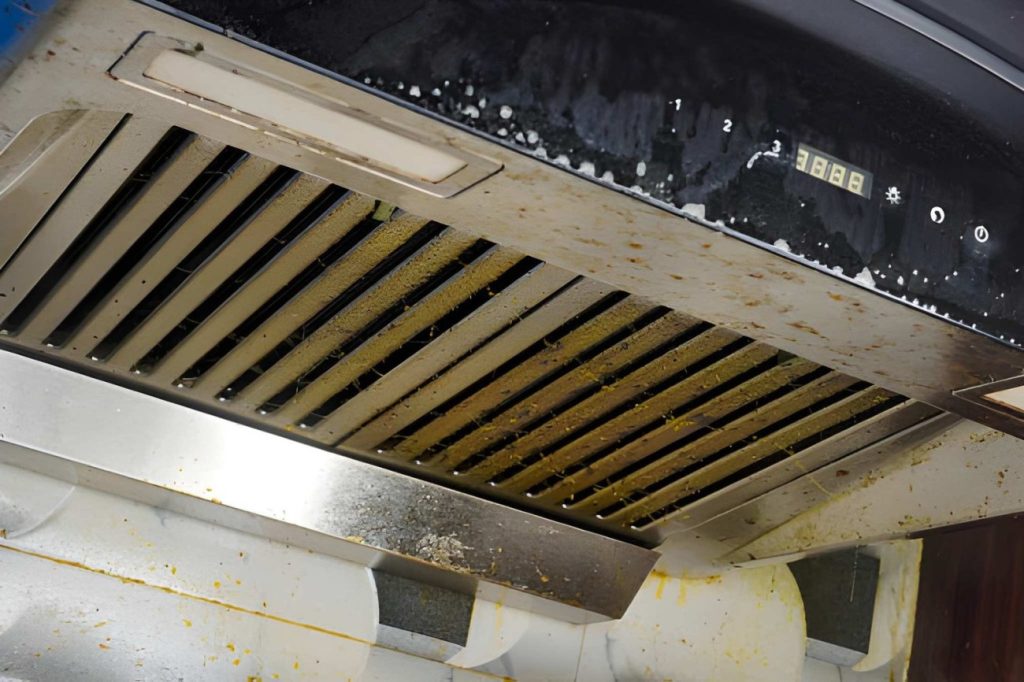
Most restaurant operators focus on what’s visible in the kitchen, but the exhaust fan sitting above the hood system often goes unnoticed until something breaks. Grease accumulates gradually throughout the entire exhaust system, and by the time a fan starts failing, the damage has typically been building for months.
A dirty hood system forces the exhaust fan to work harder than it was designed to, which accelerates motor wear, increases energy consumption, and shortens the overall lifespan of the equipment. Restricted airflow caused by grease-coated filters and duct surfaces puts continuous strain on the fan motor, leading to overheating and premature failure.
Understanding how neglect affects your exhaust fan — and what steps prevent it — can save a significant amount in repair and replacement costs. This article covers the specific ways a dirty hood system damages exhaust fans and what proper maintenance looks like.
Key Takeaways
- Grease buildup in a hood system directly strains the exhaust fan motor, causing it to wear out faster than normal
- Restricted airflow from a neglected hood is one of the leading causes of premature exhaust fan failure in commercial kitchens
- Consistent hood cleaning and system maintenance are the most effective ways to protect exhaust fan performance and extend equipment life
Key Impacts of a Neglected Hood System
Grease buildup in a neglected hood system puts direct strain on your exhaust fan, creates combustible conditions, and reduces the system’s ability to move air effectively.
Increased Exhaust Fan Wear and Malfunction
When grease accumulates in the ductwork and hood filters, airflow becomes restricted. The exhaust fan motor has to work harder to pull the same volume of air through the system. That added strain raises operating temperatures and accelerates mechanical wear.
Over time, this leads to:
- Bearing failure from excess heat and friction
- Motor burnout caused by sustained overload
- Imbalanced fan blades from uneven grease coating
- Premature belt wear in belt-driven fan systems
A fan that runs under constant stress will fail sooner than one operating in a clean, unobstructed system. What might have been a routine cleaning expense becomes a costly fan replacement or full system repair.
Fire Hazards and Safety Concerns
Grease is highly flammable. As it accumulates on hood surfaces, filters, ductwork, and the exhaust fan itself, it creates a continuous fuel source running through the entire exhaust path.
A heat flare or grease fire at the cooking surface can travel up through the duct and ignite the buildup further along the system. This is one of the most common causes of commercial kitchen fires.
The risk compounds over time. The longer cleaning is delayed, the thicker the grease deposits become and the faster a small ignition event can escalate. Fire suppression systems are designed to handle cooking fires, not duct fires fed by months of accumulated grease.
Neglecting hood cleaning also puts businesses at risk of failing fire safety inspections and violating local fire codes.
Reduced Ventilation Efficiency
A dirty hood system cannot move air efficiently. Clogged filters create resistance that limits the volume of smoke, steam, and grease-laden vapor the system can exhaust per minute.
The result is a kitchen environment with:
- Poor air quality from smoke and vapor staying in the space
- Higher ambient temperatures at cooking stations
- Grease and moisture settling on surfaces, equipment, and food prep areas
When ventilation drops, kitchen staff work in worse conditions and cooking equipment runs hotter than intended. The exhaust fan running at reduced effectiveness also draws more energy to compensate, raising operating costs.
Best Practices for Preventing Exhaust Fan Damage
Protecting your exhaust fan comes down to consistent cleaning schedules, qualified service providers, and meeting NFPA 96 standards.
Regular Inspection and Cleaning Schedules
Grease buildup is gradual, but its damage to exhaust fans is not reversible once components begin to fail. Staying ahead of accumulation requires a cleaning schedule based on your actual cooking volume and fuel type.
NFPA 96 sets the following minimum cleaning frequencies:
| Cooking Type / Volume | Cleaning Frequency |
| High-volume solid fuel (wood, charcoal) | Monthly |
| High-volume cooking operations | Quarterly |
| Moderate-volume cooking | Every 6 months |
| Low-volume cooking | Annually |
Beyond scheduled cleanings, filters should be inspected weekly in high-output kitchens. Fan blades and motor housings should be checked at every cleaning visit for grease coating, corrosion, or wobbling. Catching early signs of strain on the motor prevents the kind of wear that leads to full fan replacement.
Choosing Professional Hood Maintenance Services
Not all hood cleaning services clean the full exhaust path. A compliant cleaning covers the hood canopy, filters, ductwork, and the rooftop exhaust fan — not just the surfaces that are easy to reach.
When selecting a service provider, look for:
- Documented before-and-after photos showing the fan and ductwork
- NFPA 96 compliance certificates issued after each service
- Technicians with verifiable training or certification
- Services that include a written inspection report
Avoid providers who only clean the filters and hood surface. Grease that reaches the fan housing and motor is the primary cause of overheating and premature failure. A qualified company will degrease the fan blades, housing, and belt or direct-drive components directly.
Benefits of Compliance with Industry Standards
NFPA 96 compliance is not only a legal requirement — it directly affects how long your exhaust fan lasts. Fans operating in a clean exhaust path run at lower temperatures, draw less amperage, and experience significantly less mechanical stress.
Staying compliant also affects your business in practical ways:
- Insurance claims related to kitchen fires can be denied if non-compliance is found
- Health and fire inspections result in fewer violations
- Equipment warranties may require documented maintenance records
A fan serviced under a compliant cleaning program can last years longer than one in a neglected system. The cost of scheduled maintenance is consistently lower than motor replacement or full fan assembly replacement.