
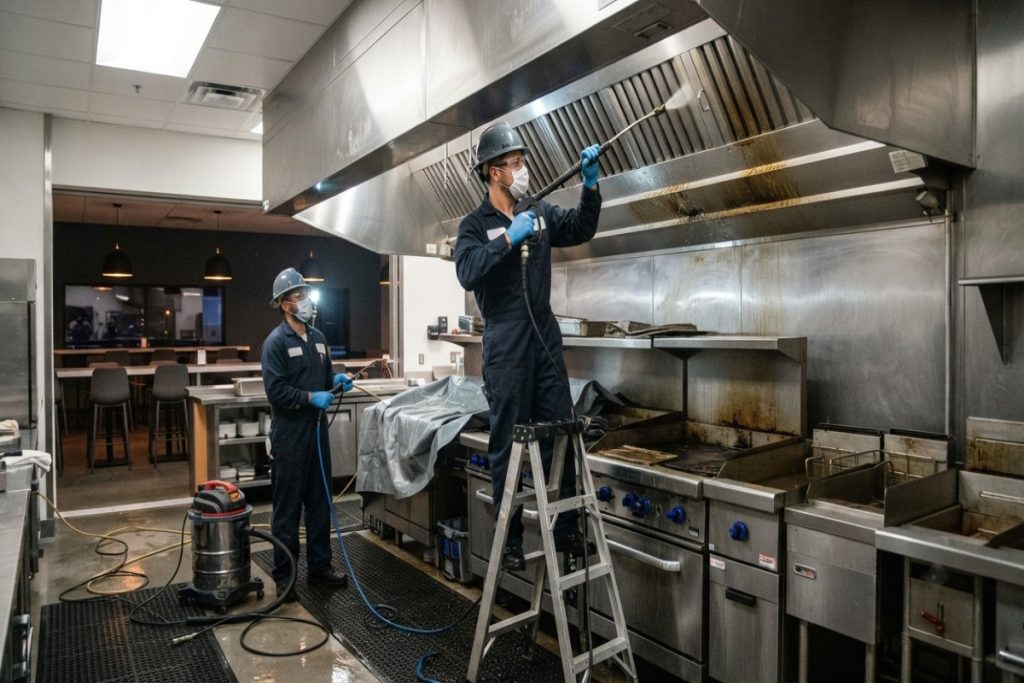
Corporate office cafeterias operate at a scale and frequency that most restaurant owners never deal with — serving hundreds of employees daily, often across multiple meal periods. Facility managers overseeing these kitchens are responsible for keeping hood and exhaust systems clean, compliant with NFPA 96 standards, and inspection-ready year-round. Failing to stay on top of this can mean fire hazards, failed health inspections, and operational shutdowns.
Hood cleaning in a corporate cafeteria environment isn’t a simple checkbox task. Cooking volume, equipment type, and operating hours all affect how often cleaning is required — with NFPA 96 setting intervals anywhere from monthly to annually based on those factors.
This article covers what facility managers specifically need to know about hood cleaning compliance, maintenance schedules, and how to avoid costly gaps in their exhaust system upkeep.
Key Takeaways
- Corporate cafeteria hoods must meet NFPA 96 cleaning frequency requirements based on cooking volume and equipment type
- Staying compliant protects the facility from fire risk, failed inspections, and unexpected operational disruptions
- Facility managers benefit from working with certified hood cleaning professionals and establishing a documented maintenance schedule
Key Compliance and Safety Considerations
Corporate office cafeterias fall under the same fire and safety codes as restaurants, and facility managers are directly accountable for meeting those standards.
Understanding NFPA 96 Standards
NFPA 96 (Standard for Ventilation Control and Fire Protection of Commercial Cooking Operations) is the primary code governing hood cleaning in commercial kitchens, including corporate cafeterias. Most local fire marshals and insurance carriers use it as their baseline requirement.
The code sets cleaning frequency based on cooking volume and equipment type:
| Cooking Volume / Equipment Type | Required Cleaning Frequency |
| High-volume or solid fuel cooking | Monthly |
| Moderate-volume cooking | Quarterly |
| Low-volume cooking (light use) | Annually |
| Charbroilers, wok cooking | Monthly |
Corporate cafeterias typically fall into the quarterly or annual category, depending on how many meals are served daily.
NFPA 96 also requires that cleaning be performed by qualified contractors, and that a written service report be left on-site after every cleaning. The report must document which components were cleaned and note any deficiencies found.
Legal Liabilities for Facility Managers
Facility managers can face direct legal exposure when hood cleaning is neglected. If a grease fire occurs and records show missed or overdue cleanings, the facility manager and the organization can be held liable for damages, injuries, or fatalities.
Key liability risks include:
- Insurance claim denial if the insurer determines cleaning schedules were not followed
- OSHA citations related to fire hazard exposure for employees
- Local fire code violations that result in fines or forced closure
- Civil litigation from injured employees or contractors
Maintaining dated service records and scheduling cleanings in advance are the most direct ways to reduce legal exposure.
Operational Best Practices for Cafeteria Hood Maintenance
Keeping a corporate cafeteria hood system compliant requires a defined cleaning schedule, vetted contractors, and consistent documentation that holds up under inspection.
Establishing a Cleaning Schedule
NFPA 96 sets cleaning frequency based on cooking volume and equipment type, not just calendar dates. Corporate cafeterias typically fall into one of these categories:
| Cooking Volume | Recommended Cleaning Frequency |
| High-volume (daily fryers, grills) | Every 1–3 months |
| Moderate (standard lunch service) | Every 3–6 months |
| Low-volume (light cooking only) | Annually |
Most corporate office cafeterias operate moderate service, meaning quarterly or semi-annual cleaning is appropriate. However, if your kitchen runs heavy fryer or char-broiler use, monthly inspections may be warranted.
Grease filters should be checked and cleaned far more frequently — often weekly — regardless of overall hood cleaning frequency.
Choosing Qualified Service Providers
Not every hood cleaning company operates to the same standard. Look for contractors certified through IKECA (International Kitchen Exhaust Cleaning Association), which verifies technicians are trained specifically to NFPA 96 standards.
Before hiring, confirm the provider:
- Carries valid liability insurance and workers’ compensation
- Provides before-and-after photos as part of every service visit
- Delivers a written report documenting what was cleaned and any deficiencies found
- Is familiar with your specific hood and fire suppression system type
Avoid contractors who offer unusually low pricing without clarifying what is and isn’t included. Partial cleaning — for example, cleaning only the filters without addressing the ductwork — does not constitute NFPA 96 compliance.
Inspection and Documentation Requirements
NFPA 96 requires that every cleaning and inspection be documented with a written report. This report should include the date of service, the technician’s name and certification, areas cleaned, grease levels observed, and any components that need repair.
Facility managers should retain these records on-site. Fire marshals and insurance providers may request them during audits or following an incident.
Post-service stickers placed on the hood by the contractor also serve as visible proof of compliance and typically include the service date, next recommended service date, and the company’s contact information.